


What Is a Track Bar on a Jeep?
When someone asks us, “What is a track bar on a Jeep?” the real question behind it is simple: how do you keep a lifted, big-tire rig stable when the suspension cycles and the steering loads up?
Knowing how the track bar works helps you diagnose wandering, clunks, sudden tire rub, and steering shimmy before they turn into bracket damage or unsafe handling.
Today, you'll learn what the track bar does, where it mounts, how it differs from a sway bar, what failure symptoms look like, and how to install and torque it correctly so your Jeep stays trail-ready.
What this article covers:
- What Does a Track Bar Do on a Jeep?
- Where Is the Track Bar Located on a Jeep?
- Track Bar Vs Sway Bar: What's the Difference?
- Common Symptoms of a Loose or Bent Jeep Track Bar
- Do You Need an Adjustable Track Bar After Lifting a Jeep?
- Track Bar Bracket Vs Track Bar: Which One Fixes the Problem?
- Build Steering And Suspension That Stays Tight When The Track Bar Loads Up
What Does a Track Bar Do on a Jeep?
What does a track bar do on a Jeep? A track bar manages lateral axle location, and that one job affects steering feel, tire clearance, and highway confidence.
Once you understand what it's controlling, you can diagnose sloppy handling fast and stop small issues before they wallow out brackets or turn into violent shimmy. Here's what the track bar actually does, in plain builder terms.
Keeps The Axle Centered Under The Jeep
Your control arms manage fore-aft placement and axle rotation, but they do not lock the axle left-to-right.
The track bar ties the axle to the frame so the housing stays centered instead of drifting sideways as the suspension compresses and droops.
That centered position matters on stock rigs, and it matters even more once you add lift height, offset wheels, or heavier tires.

Prevents Side-To-Side Axle Movement Under Load
A track bar's job sounds simple until you feel what happens without it. If the axle shifts laterally, the tires start steering the Jeep from underneath you.
The steering wheel can feel delayed, the Jeep can “step” over bumps, and it may wander like it's looking for a new zip code on crowned roads.
Manages Suspension Travel Through An Arc
The track bar swings in an arc as it pivots at the frame and axle mounts. That arc is normal, but lift height changes the bar angle, which changes how dramatic that arc becomes.
A steep track bar angle can increase lateral shift through travel, and that can show up as bump steer when steering geometry no longer matches suspension motion.
Serious setups focus on geometry, not just lift height, because when angles get corrected, the Jeep feels planted again.
Keeps Front And Rear Behavior From Getting Sketchy
Both track bars matter, but front track bar issues usually get your attention first. A front track bar problem can make the steering feel disconnected from the axle, which is a great way to ruin a highway drive or a rocky descent.
Rear track bar problems often show up as rear steer, a weird “push” through corners, or instability under throttle when the axle shifts under load.
Front issues feel scarier because the steering system lives up there, and any lateral axle movement goes straight into what your hands feel at the wheel.

Where Is the Track Bar Located on a Jeep?
You can spot a track bar on a Jeep quickly once you know what it connects to. Here's a quick, garage-friendly way to find it and confirm you're looking at the right component:
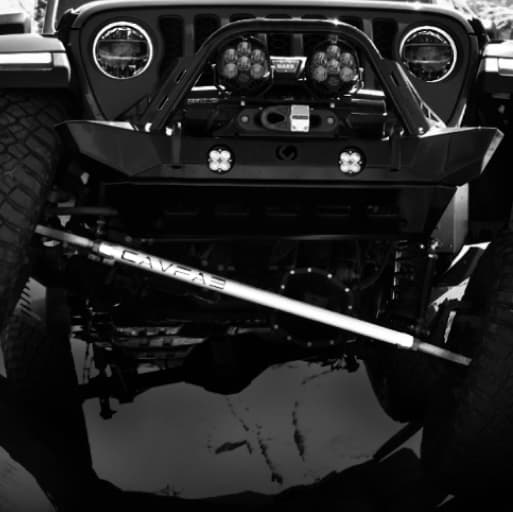
- Get the Jeep on level ground and look for the diagonal bar: Start at the front axle and look behind the tire. The track bar will run at an angle across the Jeep, not straight across like a tie rod.
- Find the frame-side bracket: On many Jeeps, the front track bar mounts to the frame on the driver side. You'll see a bracket fixed to the frame rail with a bolt running through the track bar joint.
- Follow the bar to the axle-side mount: The same bar will connect to a bracket on the axle, often on the passenger side up front. That frame-to-axle, driver-to-passenger diagonal is the track bar's signature shape.
- Repeat the process on the rear axle: The rear track bar also runs diagonally from frame to axle, but bracket placement can vary by model. The function stays the same: it anchors the axle laterally so it can't walk left or right.
- Confirm you're looking at a load-bearing mount, not “background hardware”: Track bar brackets take repeated lateral hits every time the tires deflect, the suspension cycles, or the Jeep loads up in a corner. If the bracket flexes, nothing else in the system gets a fair chance.
- Identify the joint type at each end: Track bars connect with either a bushing (rubber or polyurethane) or a spherical joint. In both cases, a through-bolt clamps the joint inside the bracket. The clamping force matters as much as the joint itself.
- Check for the telltale signs of movement: Look for shiny metal around the bolt hole, “witness marks” where the joint has shifted, or paint pen marks that no longer line up. If you see any of that, the bar may be tight, but the system is moving, and that movement will only get louder and looser.

Track Bar Vs Sway Bar: What's the Difference?
Jeep owners confuse these two because both influence “stability,” but they do completely different jobs. If you diagnose them correctly, you save money and stop throwing parts at symptoms.
A track bar controls axle position left-to-right. It keeps the axle centered under the Jeep as the suspension moves.
A sway bar resists body roll by tying together left- and right-hand suspension movement. It helps keep the body flatter in corners on pavement.
Off-road, many rigs disconnect the sway bar to improve articulation, but that does not replace the track bar's function.
A loose sway bar link can add roll and clunks. A loose track bar can make the Jeep wander, clunk under steering load, and feel unstable over bumps. Treat a track bar like a steering-critical link, because lateral axle shift changes how the Jeep responds at the wheel.
Common Symptoms of a Loose or Bent Jeep Track Bar
You can catch a track bar issue early if you look for physical signs, not just vague “it drives weird” feelings.
Watch For Visible Side-To-Side Axle Shift
Put the Jeep on the ground and have a helper cycle the steering wheel left and right while you watch the track bar ends. You want to see joint rotation, not bracket movement. If the bracket shifts, the system is not clamped and stable.
Pay Attention To Sudden Tire Rub After A Hit
If you never rubbed before and you suddenly rub after a hard bump, the axle may have shifted off-center. People often jump straight to the best Jeep fender flares, but axle centering needs to be verified first, because an off-center axle can create rub that looks like a clearance problem.

Uneven Handling
A bent bar or shifted axle can make the Jeep behave differently, turning one direction more than the other. That uneven feel often appears after an impact or after geometry changes from a lift.
Inspect Bolt Holes For Ovaling At The Frame Side
The frame-side bracket often takes the brunt of repeated lateral load. If the hole starts to oval, the bolt can move even when it feels “tight.” Once that happens, torque alone will not fix it. You must address the damaged interface.
Do You Need an Adjustable Track Bar After Lifting a Jeep?
Adjustable track bars exist for a reason: they let you re-center the axle after a lift changes geometry. If you care about fitment and handling, you care about centering.
With mild lifts, some rigs remain driveable with a stock bar, but “driveable” does not mean optimized. Measure axle centering before you assume it's fine.
As lift height climbs, centering becomes more important for tire clearance and steering consistency. A centered axle also keeps suspension travel more predictable, because one side is not starting closer to contact points than the other.
Caster and toe affect how the Jeep tracks and returns to center. Axle centering affects where the axle physically sits under the Jeep. They work together, but you do not fix axle shift with toe adjustment.
Track Bar Bracket Vs Track Bar: Which One Fixes the Problem?
Sometimes the bar is fine, and the bracket is failing. Sometimes the bracket is fine, and the bar is bent, or the joint is worn. The right fix starts with identifying what is actually moving.

Pick A Bracket Solution When The Structure Moves
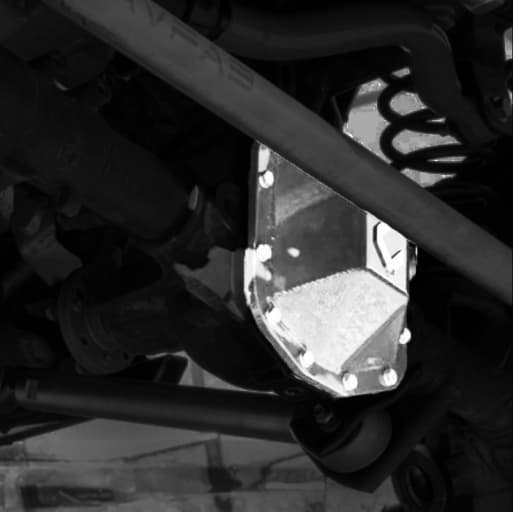
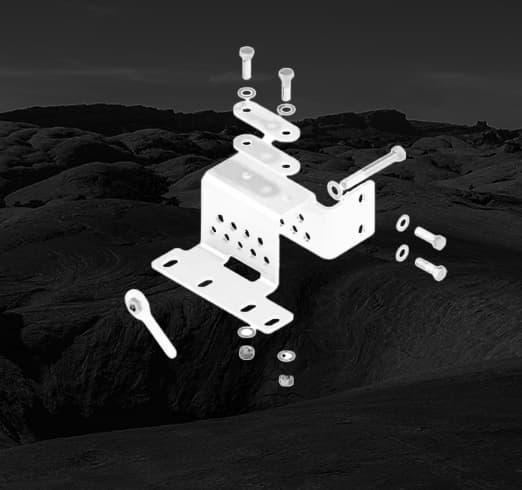
Bracket reinforcement makes sense when you see bracket flex, cracking, or ovaling holes. If the joint looks tight but the bracket shifts during steering input, the structure needs attention.
Replace The Bar When The Bar Or Joint Is The Weak Link
A bent bar, a worn joint, or an incorrect length for your lift can all create problems that no bracket upgrade alone will solve.
Some Setups Need Both
A stronger bar can stress a weak bracket harder. A stronger bracket can reveal a worn joint faster. Real reliability comes from building a balanced system.
For XJ, ZJ, and MJ builders going over-the-axle, the CavFab Over the Axle (OTA) Track Bar System supports geometry that keeps the axle controlled, where lower setups can fight clearance and angles.
Build Steering And Suspension That Stays Tight When The Track Bar Loads Up
Here at CavFab, we build Jeep suspension solutions for the drivers and shops who actually use their rigs, not just park them.
We start with function first, then we layer in fit and finish, because nothing kills confidence faster than steering that feels vague, noisy, or inconsistent when the axle loads up.
For older platforms where clearance and correct steering paths matter, our CROSS-OVER STEERING XJ/TJ/ZJ/MJ/LJ Kit supports real-world trail clearance with an engineered layout that keeps steering behavior predictable.
On JK and JKU builds, the 1 Ton Bolt-On Steering System for JK/JKU gives you bolt-on strength you can trust when you're pushing heavier tires and hard terrain.
For JL and JT owners, the 2.5 Ton Bolt-On Steering System for JL/JT delivers the kind of confidence you want when the front end loads up on ledges, ruts, and fast washboard.
Conclusion
A track bar is the quiet piece of hardware that decides whether your Jeep feels planted or sketchy. Keep it tight, keep the axle centered, and most “mystery steering” problems suddenly stop being mysterious.
If your rig starts wandering, clunking, or doing that subtle side-step over bumps, don't blame the tires first; put eyes on the track bar, the brackets, and the bolt holes. Five minutes of inspection now beats chasing vibes and ovaled holes later.
Want your front end to feel crisp again, on the highway and on the trail?
Start with CavFab Jeep suspension upgrades that are built for real load and repeatable fitment, then match them with Jeep armor that protects what you just dialed in.
If you've got questions about Jeep parts, hit us up, and we'll help you build it right the first time.
Ready to learn more? Check out these articles: