


What Is a Drag Link on a Jeep?
If you wheel hard, build your own rig, or care how your Jeep responds when the trail gets ugly, you need to understand what is a drag link on a Jeep and why it matters. Steering is not magic. It is geometry, leverage, and material strength working together under load.
The drag link is one of the most stressed steering components on a solid-axle Jeep. It transfers steering input directly from the steering box to the knuckle, and when it flexes, bends, or wears out, the driver feels it immediately.
Understanding how it works, where it fails, and when to upgrade puts control back in your hands instead of hoping the trail plays nice.
What this article covers:
- What Does a Drag Link Do on a Jeep?
- Where Is the Drag Link Located on a Jeep?
- Drag Link Vs Tie Rod: What's the Difference?
- Common Signs Your Jeep Drag Link Is Bad
- What Causes Drag Link Wear or Failure?
- Can a Bad Drag Link Cause Death Wobble?
- Drag Link Angles, Lifted Jeeps, And Steering Geometry
- When Should You Upgrade a Jeep Drag Link?
- Frequently Asked Questions
What Does a Drag Link Do on a Jeep?
The drag link converts rotational input from the steering wheel into lateral movement at the front axle.
When you turn the wheel, the steering box rotates the pitman arm, and the drag link pushes or pulls the steering knuckle to change direction.
Unlike cosmetic components like Jeep fenders or Jeep armor, the drag link directly affects safety and drivability. Every steering correction and trail impact runs through this single bar.
A properly functioning drag link must maintain consistent geometry under load. When it flexes, or its joints develop play, the Jeep begins to wander, overcorrect, or feel disconnected from driver input.
In solid-axle Jeeps, the drag link also works in conjunction with lateral axle control. This is why understanding what is a track bar on a Jeep becomes critical.
The drag link and track bar must travel through similar arcs. When they do not, steering input creates unintended axle movement instead of a clean directional change.

Where Is the Drag Link Located on a Jeep?
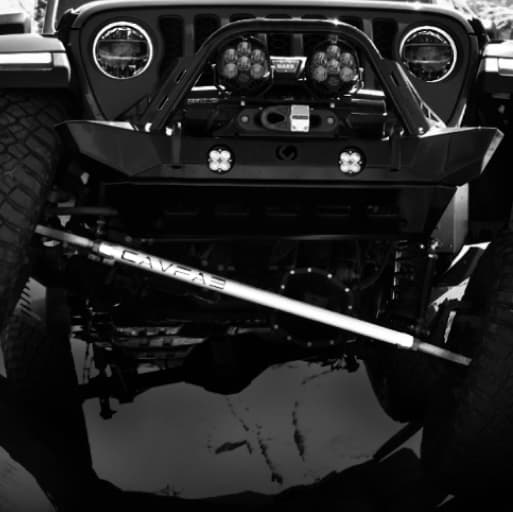
The drag link runs from the pitman arm on the steering box down to the steering knuckle. On most factory Jeep configurations, it connects to the passenger-side knuckle or to a tie rod end, depending on steering style.
Its location places it in a high-risk zone. Rocks, ledges, and compression events target the drag link more often than many drivers realize.
Even street-driven Jeeps expose the drag link to constant cyclic loads from potholes and suspension travel.
Because the drag link sits forward of components like Jeep front bumpers and below the frame rails, it remains vulnerable unless specifically designed for clearance and strength. Bent drag links are not rare. They are common among lifted or heavily wheeled rigs still running factory components.
Drag Link Vs Tie Rod: What's the Difference?
The drag link and tie rod perform different jobs, even though both are steering components and often get confused.
The drag link transfers steering input from the steering box to the wheels. The tie rod synchronizes the wheels by linking both knuckles together. One controls direction. The other maintains alignment.
Key differences matter when diagnosing steering issues or planning upgrades:
- The drag link controls steering input and directional change.
- The tie rod controls toe angle and wheel synchronization.
- The drag link experiences a higher angular load from the steering box.
- The tie rod primarily handles lateral forces between wheels.
Upgrading one without addressing the other can create an imbalance. This is why steering systems should be evaluated as a complete assembly, especially when combined with suspension changes like Jeep suspension upgrades.

Common Signs Your Jeep Drag Link Is Bad
Drag link problems almost never show up as a clean “it's broken” moment. They show up as small steering annoyances that get worse every week until the Jeep feels loose, twitchy, or unpredictable.
Most drivers feel the symptoms before they can name the part. If you catch them early, you can fix the root issue before the extra slop starts hammering your tie rod ends, track bar joints, and steering box.
Here's what a failing drag link typically looks and feels like:
- You can move the steering wheel, and nothing happens for a split second: That dead spot is usually joint play at the drag link ends, and it forces you to constantly correct just to hold a lane.
- The Jeep wanders on the highway, especially with bigger tires: You'll feel like you're “chasing” the steering instead of driving straight, even after an alignment.
- You get a clunk when you turn or hit a bump at low speed: That sound often comes from a worn drag link end shifting under load, especially during parking-lot turns or when one front tire drops into a pothole.
- The steering wheel doesn't return to center smoothly: Instead of a clean self-center after a turn, it feels sticky or inconsistent, which can happen when joints bind or the link is slightly bent.
- Your front tires start wearing in odd patterns you can't explain: If you see feathering or uneven wear that comes back quickly after alignment, look for steering slop before blaming the tires.
These symptoms get written off as “Jeep stuff” all the time. The difference is repeatability: if the same looseness, clunk, or wander shows up in the same situations, you're dealing with mechanical play.

What Causes Drag Link Wear or Failure?
Drag links fail due to a combination of load, geometry, and material limitations. Factory components are designed for stock tire sizes and street driving, not for aggressive off-road use or heavy modifications.
Several factors accelerate wear:
- Increased tire size adds leverage and steering load.
- Lift kits change steering angles beyond factory tolerance.
- Trail impacts cause micro-bends that weaken the shaft over time.
- Poor joint quality leads to rapid wear and slop.
Understanding what does a track bar do on a Jeep helps clarify why drag links wear faster on lifted rigs. When the drag link and track bar are no longer parallel, every steering input introduces side load. That load translates into joint wear, flex, and eventual failure.
Material choice matters. Thin-wall tubing and undersized joints may survive daily driving but fail under trail abuse.
Can a Bad Drag Link Cause Death Wobble?
Yes. A worn or improperly angled drag link can contribute to death wobble, although it is rarely the only cause.
Death wobble results from oscillation in the front suspension and steering system when components allow uncontrolled movement.
A bad drag link introduces steering input instability. When combined with worn bushings, loose track bar mounts, or improper alignment, it can trigger violent oscillation.
The most common drag link-related contributors include:
- Excessive play in drag link joints: Even a small amount of slop at either end lets the steering “float,” which increases the chance of oscillation when a tire hits a bump.
- Poor drag link and track bar angle relationship: When these angles don't closely match, suspension movement creates bump steer, and that mismatch can help trigger wobble under the right conditions.
- Bent drag link shafts that alter geometry: A slight bend changes effective length and angle, which can create inconsistent steering input and amplify instability.
- Loose mounting hardware at the pitman arm or knuckle: If the hardware is not properly torqued or the holes are wallowed, the connection can shift under load and start shaking.

Drag Link Angles, Lifted Jeeps, And Steering Geometry
Lifting a Jeep changes everything about steering geometry. The drag link angle steepens as the axle drops, increasing angular load on the joints and altering the steering arc.
Ideally, the drag link and track bar should remain as parallel as possible. When they diverge, bump steer increases. The Jeep reacts to suspension movement instead of driver input.
Poor geometry creates a cascade of issues:
- The steering wheel tugs in your hands when the suspension compresses or rebounds
- The Jeep wanders at highway speeds and needs constant micro-corrections
- The front end feels inconsistent through whoops, ruts, or off-camber hits
- Joints and bushings wear out faster because side-load increases everywhere
- Driver confidence drops because the feedback stops being predictable
Proper steering design accounts for lift height, axle position, and component strength. This is why high-quality steering upgrades often accompany axle and Jeep differential modifications in serious builds.
When Should You Upgrade a Jeep Drag Link?
Not every Jeep needs an upgraded drag link, but many do long before owners realize it. Usage, tire size, and terrain dictate the timeline.
You should consider upgrading if:
- You run tires larger than stock.
- Your Jeep sees regular trail use.
- You have installed a suspension lift.
- Steering feel has degraded despite alignment.
Upgrading becomes essential when factory components reach their design limits. Stronger materials, improved joint design, and corrected geometry restore control and reduce stress on related components.
A drag link upgrade is not about chasing trends. It is about engineering margin and reliability under real-world load.

Frequently Asked Questions
Is a Drag Link the Same as a Tie Rod?
No. The drag link transfers steering input from the steering box to the knuckle. The tie rod connects both knuckles and maintains wheel alignment. They serve different functions and experience different loads.
Can You Drive With a Bent Drag Link?
Driving with a bent drag link is unsafe. A bend alters geometry, increases joint stress, and can fail without warning. Replace or upgrade immediately to avoid loss of steering control.
Do You Need a New Drag Link When You Lift a Jeep?
Not always, but often. Lifts change steering angles and load paths. Many factory drag links operate outside their design range after lifting, making upgrades a smart and sometimes necessary decision.
Conclusion
When you understand how the drag link works, you stop guessing. You can pinpoint where slop starts, why geometry changes after a lift, and what needs to get tightened, rebuilt, or upgraded before it becomes a bigger problem.
If you're building for reliability, treat steering like a foundation, not an afterthought. CavFab approaches every steering solution with an engineering-first mindset and real-world trial feedback from the community that uses it.
When you're ready to dial in your setup with proven Jeep parts, get in touch with us here at CavFab.
Ready to learn more? Check out these articles: