


What Is a Steering Damper on a Jeep?
Understanding what is a steering damper on a Jeep is starts with knowing what it does not do. It does not steer the Jeep, and it does not hold the axle or wheels in position. Its job is to control vibration and kickback before that energy reaches the steering wheel.
If your steering wheel shakes over washboard or gets yanked when a tire tags a rock, the damper is the part that takes the edge off.
It can make the Jeep feel calmer and more composed, especially with bigger tires, but it will never cover up a loose track bar or sloppy mounts for long.
In the sections below, we'll break down what the damper actually does, where it mounts, how it differs from a track bar, and how to tell when it's worn so you fix the right problem the first time.
What this article covers:
- What Does a Steering Damper Do on a Jeep?
- Where Is the Steering Damper Located?
- Steering Damper vs Stabilizer: Is There a Difference?
- Steering Damper vs Track Bar: What's the Difference?
- Signs a Jeep Steering Damper Is Worn Out
- What a Steering Damper Can Fix And What It Can't
- Can a Steering Damper Cause Death Wobble?
- Do You Need a Steering Damper After Lifting a Jeep?
- How to Check a Steering Damper on a Jeep
- Frequently Asked Questions
What Does a Steering Damper Do on a Jeep?
A Jeep steering damper's role is to slow down and absorb rapid movement in the steering linkage. It does not prevent movement. It controls how quickly that movement happens.
On a Jeep, that matters because solid axles transmit more feedback directly into the steering wheel than independent suspension setups. Bigger tires, heavier wheels, and stiffer sidewalls all amplify that feedback.
A properly functioning damper helps in a few specific ways:
- It reduces steering wheel shake caused by bumps, potholes, and rough pavement.
- It helps control rapid back-and-forth movement through the tie rod and drag link.
- It makes the steering feel calmer and less twitchy at speed.
- It cuts down on harsh kickback when a tire hits an obstacle off-road.
This effect is most noticeable on solid axle Jeeps with aggressive tires because there is less isolation between the axle and the steering wheel. The damper acts as a filter, not a fix.

Where Is the Steering Damper Located?
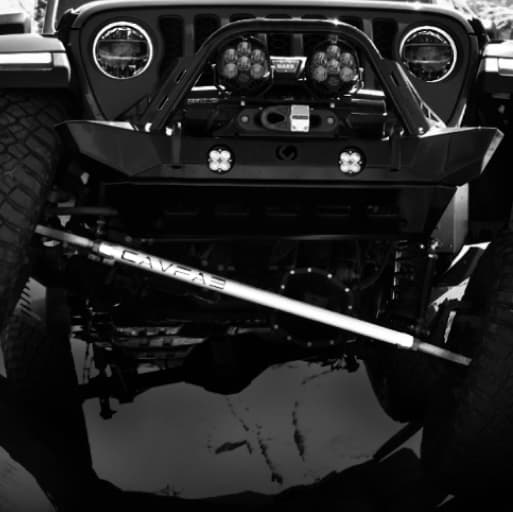
The steering damper is mounted directly to the steering linkage, typically between the axle area and the tie rod.
The exact mounting points vary by Jeep platform, but the goal is always the same: intercept steering movement before it reaches the wheel.
One end of the damper is fixed to the axle, frame, or a bracket tied to the chassis. The other end attaches to the tie rod or drag link, allowing it to react to steering motion in real time.
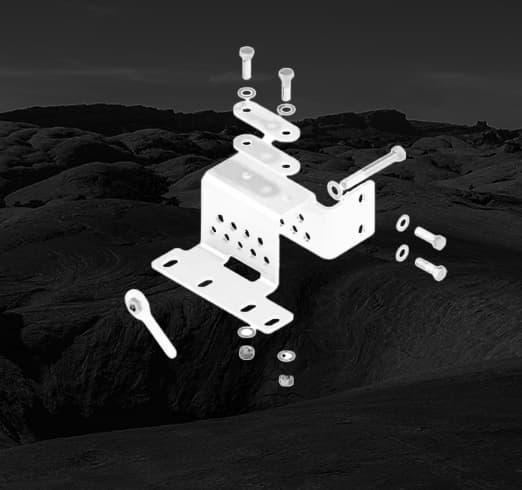
After a lift, some Jeeps use relocation brackets to correct the damper angle or clear larger tires. These brackets do not change the damper's behavior. They simply keep it operating within its intended range so it can dampen movement consistently, rather than binding or bottoming out.
Steering Damper vs Stabilizer: Is There a Difference?
Functionally, no. Most people use the terms interchangeably, and they describe the same component.
“Steering stabilizer” is a common aftermarket term, while “steering damper” is the more mechanically accurate description. In both cases, the job is to dampen, not stabilize, the axle or steering geometry.
The confusion comes from the name. A damper stabilizes feel, not structure. It does not hold anything centered or prevent movement. It only slows and smooths movement that already exists.
Steering Damper vs Track Bar: What's the Difference?
This is where many Jeep owners go wrong, because the symptoms can feel similar even though the causes are not.
The track bar controls axle position from side to side. It physically keeps the axle centered under the Jeep. That structural role is why understanding what does a track bar do on a Jeep is critical when diagnosing steering problems.
The steering damper controls vibration and feedback through the steering linkage. It does not locate the axle or correct geometry.
- The track bar is responsible for stability and axle control.
- The steering damper is responsible for comfort and steering feel.
If the track bar is loose or misaligned, replacing the damper will not fix the problem. At best, it will mask symptoms temporarily. That is why a Jeep with track bar issues can still feel unstable even with a brand-new damper installed.

Signs a Jeep Steering Damper Is Worn Out
Steering dampers wear gradually, which means their failure often feels like a slow decline rather than a sudden break.
Common signs include:
- Steering wheel shake that slowly becomes more noticeable over time.
- Excessive vibration on washboard roads or broken pavement.
- Steering that feels nervous or overly reactive after hitting bumps.
- Visible fluid leaks from the damper body or shaft.
- A bent shaft or dented body from trail impacts.
A worn damper usually does not create violent symptoms on its own, but it allows more feedback to reach the driver. That extra feedback can make other issues feel worse than they really are.
What a Steering Damper Can Fix And What It Can't
This is where honesty matters. A steering damper has a clear job, and it does it well, but it is not a cure-all.
What it can help with:
- Mild shimmy caused by tire imbalance or rough terrain feedback.
- Harsh kickback through the steering wheel.
- Steering fatigue on long drives or highway trips.
What it cannot fix:
- Death wobble caused by loose or worn components.
- Worn ball joints or tie rod ends.
- Loose track bar bolts or wallowed-out mounts.
- Poor alignment or incorrect caster settings.
If a Jeep has structural looseness, the damper can only soften the symptoms. It cannot remove the root cause, which usually lives elsewhere in the steering and suspension system.

Can a Steering Damper Cause Death Wobble?
A bad steering damper usually does not cause death wobble on its own. Death wobble is almost always the result of looseness combined with a vibration trigger and unfavorable geometry.
That said, a weak or blown damper can make symptoms feel worse or more frequent. When vibration is no longer controlled, it can more easily excite existing looseness in components like the track bar, tie rod ends, or control arm bushings.
Think of the damper as a filter. When the filter stops working, more noise gets through, but the noise was already there.
Do You Need a Steering Damper After Lifting a Jeep?
A steering damper is not always strictly required after a lift, but it is often recommended. Lifts and bigger tires increase steering feedback by changing angles, leverage, and unsprung weight.
Upgrading or replacing the damper makes sense when:
- You run heavier wheels and tires that transmit more force.
- You drive off-road regularly on rocks, washboard, or uneven terrain.
- You want a calmer steering feel at highway speed.
- You are tightening up the system after correcting structural issues.
It is best viewed as a finishing component. Once the axle is centered, the joints are tight, and the alignment is correct, a good damper helps the whole system feel composed. This is especially true on builds that already run upgraded Jeep suspension and other reinforced Jeep parts.

How to Check a Steering Damper on a Jeep
Checking a steering damper is straightforward, but it should never be done in isolation from the rest of the system.
Start with a visual inspection. Look for oil leaks, dents, or a bent shaft. Any of those means the damper is no longer doing its job properly.
Next, disconnect one end and move the shaft by hand. Resistance should be smooth and consistent through the full stroke. Sudden changes in resistance or free movement indicate internal wear.
Finally, check the mounts. Loose bolts or sloppy bushings can mimic a bad damper even when the damper itself is fine.
While you are there, it is smart to inspect related components like the track bar, tie rod ends, and overall alignment so you are not missing the real issue.
Frequently Asked Questions
Is a Steering Damper Necessary on a Jeep?
Not strictly, but most solid-axle Jeeps benefit from one. It improves steering feel and reduces fatigue, especially with larger tires or rough road conditions.
Can You Drive Without a Steering Damper?
Yes, a Jeep can be driven without one, but steering feedback will be harsher. On rough roads or with aggressive tires, most drivers prefer the added control a damper provides.
Will a Steering Damper Fix Death Wobble?
No. A steering damper can mask symptoms, but will not fix death wobble. The real cause is looseness and geometry, often related to axle control components.
Conclusion
A steering damper helps control vibration and kickback, making a Jeep feel calmer and more predictable, especially with bigger tires and solid axles.
It improves comfort and confidence, but it does not replace proper axle control or tight steering components.
When the axle is centered, the joints are solid, and the geometry is right, a steering damper does what it is meant to do: smooth out the noise so the Jeep feels composed instead of chaotic.
If you're tightening up a build or planning upgrades, explore CavFab-engineered Jeep suspension components and proven Jeep parts designed to handle real load and real miles.
Build it once, fix the right problem, and end up with a Jeep that tracks straight and feels composed on the road and on the trail.
Ready to learn more about steering and suspension?