


Jeep Wrangler vs Rubicon
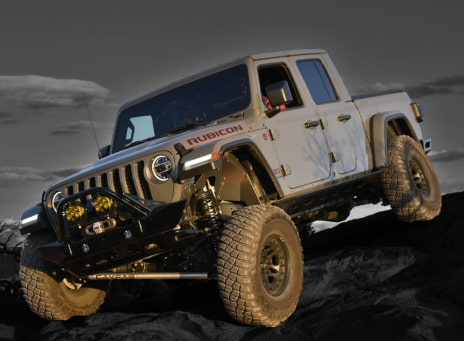
A lot of people think of the Wrangler and Rubicon as if they're two separate vehicles. They're not. The Rubicon is a Wrangler trim level that comes equipped with additional factory off-road hardware designed for more demanding terrain.
When evaluating Jeep Wrangler vs Rubicon, the real question is whether you should buy a standard Wrangler and build it over time or spend more upfront for the Rubicon's trail-focused equipment.
Both approaches can lead to a highly capable rig. The best choice depends on how you drive, how often you hit the trails, and whether you'd rather pay for capability at the dealership or in the garage.
What this article covers:
- Quick Comparison: Wrangler vs Rubicon Specs
- Off-Road Capability
- Cost And Value
- Factory Equipment And Trail Features
- Modification Potential And Long-Term Buildability
Quick Comparison: Wrangler vs Rubicon Specs
The Jeep Wrangler lineup includes several trims, each aimed at different drivers. The Rubicon sits near the top of the range when off-road performance is the priority.
|
Spec |
Jeep Wrangler |
Jeep Wrangler Rubicon |
|
Vehicle Type |
Wrangler model with several trims |
Off-road-focused Wrangler trim |
|
Intended Use |
Daily driving, light trails, custom builds |
Technical trails and rock crawling |
|
Axles |
Varies by trim and model year |
Heavy-duty Dana 44 axles |
|
Locking Differentials |
Not standard on most trims |
Front and rear lockers |
|
Transfer Case |
Standard 4x4 transfer case |
Rock-Trac transfer case |
|
Suspension |
Standard Wrangler suspension |
More trail-focused factory setup |
|
Tires |
Smaller street/all-terrain tires |
Larger off-road tires |
|
Starting Price |
Lower |
Higher |
Specifications vary by model year, drivetrain, body style, engine choice, and optional equipment packages. Always compare the exact Wrangler you're considering before making a final decision.

Off-Road Capability
The biggest differences between a standard Wrangler and a Rubicon appear when traction disappears, and obstacles become more technical.
Jeep Wrangler
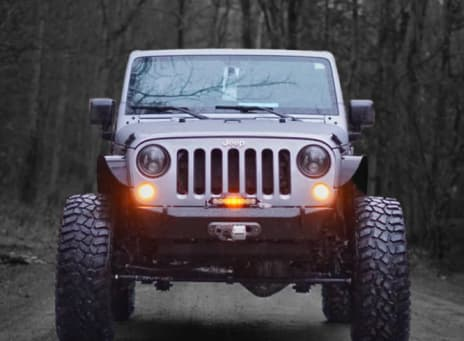
Even the most basic Wrangler offers a strong off-road foundation. Solid axles, available four-wheel drive, and excellent aftermarket support make it capable far beyond what most SUVs can achieve.
A standard Wrangler performs well in several situations:
- It handles dirt roads, forest service routes, and moderate trail systems with confidence.
- It works well for beach driving, camping trips, and weekend exploration.
- It provides a strong platform for owners planning future suspension, steering, tire, and armor upgrades.
The primary limitation comes from traction management. Many non-Rubicon Wranglers use open differentials. When one tire loses traction, power naturally follows the path of least resistance. That can leave the tire with grip doing very little work while the spinning tire gets all the power.
Jeep Wrangler Rubicon
The Rubicon arrives from the factory with equipment designed specifically to address traction challenges.
Key trail-focused upgrades include:
- Front and rear locking differentials that force both wheels on an axle to rotate together.
- A Rock-Trac transfer case with a lower crawl ratio for better low-speed control.
- An electronic sway bar disconnect that allows greater suspension articulation.
- Heavy-duty Dana 44 axles built for increased loads and tougher terrain.
- Larger factory off-road tires that improve traction and obstacle clearance.
The Rock-Trac transfer case deserves special attention. Its lower gearing multiplies torque and slows wheel speed, giving drivers greater control during steep climbs, descents, and rock-crawling situations.
The sway bar disconnect adds another advantage. By allowing the suspension to move more independently, the tires maintain contact with the ground over uneven obstacles. More tire contact generally means more traction.

Verdict
Rubicon wins for factory off-road capability.
A standard Wrangler can become extremely capable with upgrades, but the Rubicon arrives with trail equipment that many serious off-roaders eventually install themselves.
Cost And Value
Capability isn't free. The question becomes whether the extra equipment justifies the additional cost.
Jeep Wrangler
A standard Wrangler offers a lower entry price and more flexibility for builders.
Many buyers appreciate several advantages:
- A lower purchase price leaves more room for future modifications.
- Owners can prioritize upgrades based on their specific trail goals.
- Money isn't tied up in factory equipment that may never get used.
- It creates a flexible platform for custom builds.
Jeep Wrangler Rubicon
The Rubicon costs more upfront, but it includes expensive hardware that would cost significant money to replicate later.
Several components contribute to its value:
- Front and rear locking differentials.
- Heavy-duty axles.
- Rock-Trac transfer case.
- Factory trail protection.
- Off-road-focused suspension and tire package.
For drivers who regularly tackle difficult terrain, these features often justify the price premium.
Verdict
Standard Wrangler wins for budget-led builders, while Rubicon wins for ready-made capability.
If you're planning extensive customization anyway, a lower-priced Wrangler may offer more flexibility. If you want serious trail performance immediately, the Rubicon becomes easier to justify.
Factory Equipment And Trail Features
Factory equipment often determines how much work a Jeep needs before its first serious trail trip.
Jeep Wrangler
The standard Wrangler focuses on versatility rather than specialization.
Its strengths include:
- A simpler factory setup.
- More street-friendly ride characteristics.
- Less aggressive tire packages.
- A clean starting point for customization.
- Lower overall ownership costs.
Many experienced builders actually prefer starting with a simpler platform because they know they'll replace many factory components anyway.

Jeep Wrangler Rubicon
The Rubicon includes hardware that directly improves trail performance.
Its factory package typically includes:
- Heavy-duty Dana 44 axles.
- Front and rear lockers.
- Factory skid plate protection.
- Electronic sway bar disconnect.
- More aggressive off-road tires.
- Trail-focused gearing.
These aren't cosmetic upgrades. They improve durability, traction, articulation, and control in real-world conditions.
Verdict
Rubicon wins for factory trail equipment.
Drivers who frequently encounter rocks, ledges, deep ruts, and loose terrain will benefit from the additional hardware immediately.
Modification Potential And Long-Term Buildability
Spend some time considering where you need your Wrangler to perform when weighing the pros and cons of each.
Jeep Wrangler
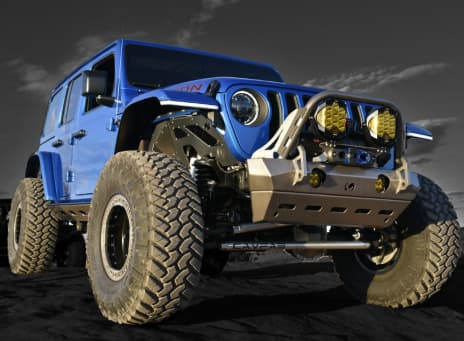
The standard Wrangler remains one of the best aftermarket platforms in the off-road world.
Its lower purchase price often allows builders to invest directly into upgrades that match their driving style. It's easy to improve rigs with Jeep suspension, Jeep control arms, and Jeep track bars rather than paying for factory equipment that may need to be replaced later.
As lift height increases, suspension geometry becomes increasingly important. Control arm angles affect caster, ride quality, and axle positioning. Track bars influence axle centering and steering feel. Well-engineered components help maintain predictable handling both on and off the trail.
A standard Wrangler gives builders complete control over those decisions.
Jeep Wrangler Rubicon
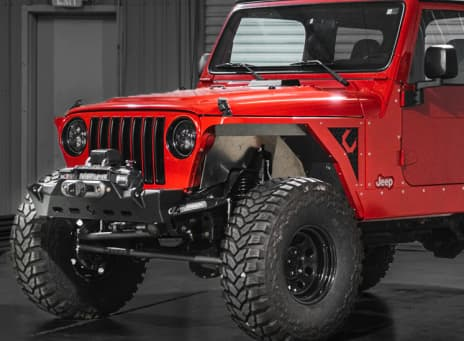
The Rubicon starts closer to a finished trail rig.
Because lockers, axle strength, and crawl control already exist, owners can focus on additional capability rather than foundational upgrades.
Popular modifications often include:
- Larger tire packages.
- Stronger steering systems.
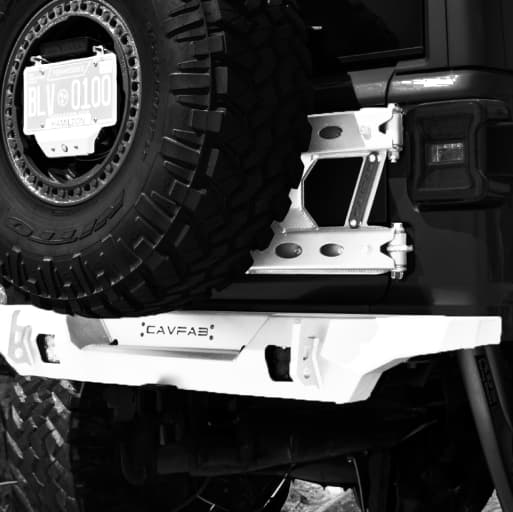
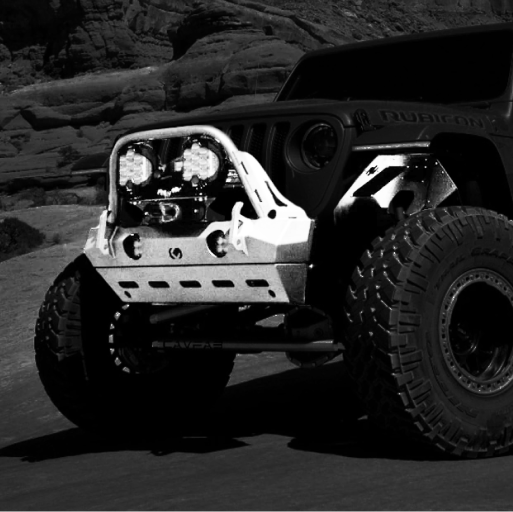
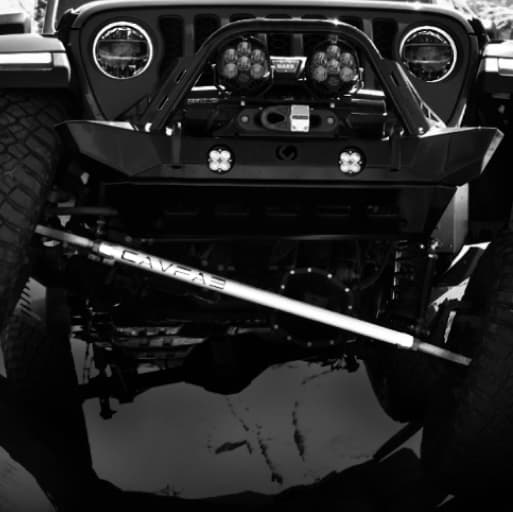
- Jeep armor.
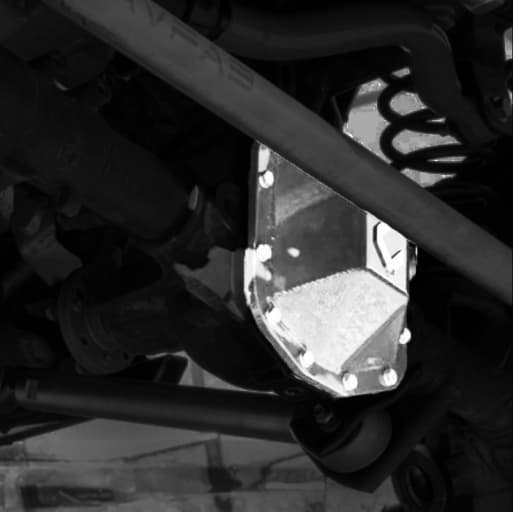
- Jeep skid plates.
- Jeep bumpers.
Even Rubicons benefit from stronger steering components once larger tires enter the picture. Bigger tires create more leverage on steering systems, particularly when navigating rocks at low speed.
Conclusion
The Rubicon isn't a different Wrangler. It's a Wrangler that starts further down the trail-building path.
Either platform can become an extremely capable build with the right combination of steering, suspension, armor, skid plates, differential protection, and bumpers.
At CavFab, we build American-made Jeep parts for Wrangler owners who expect their rigs to work hard.
From heavy-duty Jeep control arms and Jeep track bars to trail-proven Jeep armor, Jeep skid plates, Jeep differential protection, and Jeep bumpers, we focus on strength and durability that holds up when the trail gets rough.
Build it once, build it right, and spend more time driving than fixing.
Ready to learn more about Jeeps?