


How to Adjust a Track Bar on a Jeep JK
A JK can drive straight and still feel “off.” You catch it in the steering wheel on small bumps, you notice the Jeep sits a touch sideways over the axle, or you hear that one clunk that only shows up when the suspension loads hard.
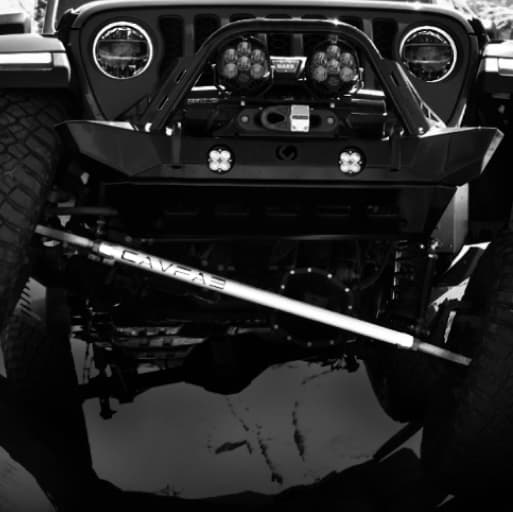
The fix often comes down to geometry, not guesswork. Below is a builder-clean walkthrough of how to adjust track bar Jeep JK setups so the axle sits centered at ride height, your steering behaves consistently, and you stop chasing problems that keep coming back.
What this article covers:
- Why You Might Need to Adjust a Track Bar on a Jeep JK
- Safety and Preparation
- Tools and Setup
- How to Adjust a Jeep JK Track Bar
- Front vs Rear Track Bar Adjustment
- Adjustable vs Fixed Track Bars
- Final Checks After Adjustment
Why You Might Need to Adjust a Track Bar on a Jeep JK
Jeep track bars do not go out of adjustment on their own. Something changes in the suspension system, and the axle position changes with it.
The track bar is simply the component that reveals the issue. Most adjustments happen after a lift, but that is not the only trigger.
New springs, control arm changes, bracket upgrades, axle swaps, or even accumulated wear can all move the axle laterally enough to be noticeable.
Common signs the track bar needs adjustment include:
- The axle sits visibly off-center in the wheelwell at ride height.
- The steering wheel feels busy or unsettled over small bumps.
- The Jeep tracks fine straight ahead but reacts oddly to road imperfections.
- You hear a clunk as the suspension loads or unloads.
- A recent suspension change made the Jeep feel worse instead of better.
These symptoms are easy to misdiagnose. Many builders chase steering components, alignment, or tire balance first. In reality, the axle is often just not centered anymore.
Adjusting the track bar re-centers the axle under the chassis at ride height.
That restores proper geometry so the steering and suspension can do their jobs without compensating for lateral shift.

Safety and Preparation
Taking a few extra minutes to stabilize the Jeep and work at true ride height makes the difference between a clean adjustment and one you end up redoing.
Before you touch any hardware, make sure the basics are handled:
- Park the Jeep on a flat, stable surface that will not let it roll or settle. Concrete is ideal, packed asphalt can work, and uneven dirt makes accurate measurement harder.
- Chock the wheels every time. Your hands will be near brackets and hardware, and even small movements can throw off measurements or create a safety issue.
- Set the vehicle at ride height with the full weight on the tires. Do not adjust with the axle hanging or with one side on a jack stand. Ride height is where the track bar actually locates the axle during real driving.
Once the Jeep is stable and sitting naturally, your measurements will be repeatable, and your adjustment will hold.
Tools and Setup
Before you start adjusting anything, gather what you need and decide how you are going to measure:
- A quality tape measure you trust
- A breaker bar and the correct sockets and wrenches for your track bar hardware
- A torque wrench that covers the required torque range
- Penetrating oil for stubborn bolts
- A marker or paint pen to track adjustment changes
- A dead-blow hammer for persuading hardware without damaging it
Pick a measuring method you can repeat and stick with it through the entire adjustment. Consistency matters more than which method you choose.
A reliable approach is measuring from a fixed chassis reference point to a fixed axle reference point on both sides, then comparing the numbers. Measuring tire-to-fender distance can work, but tire size, wheel offset, and fender trimming can skew results if you are not careful.
If you want to avoid fender variance altogether, measure from the frame rail to the axle tube on both sides at the same front-to-back position. Keep the tape level and pulled tight each time.
If your build goes beyond basic bolt-ons, remember that you are adjusting one part of a larger geometry system. A lot of the supporting hardware that affects alignment and axle control lives under the broader category of Jeep suspension, even when the job at hand is just a track bar.

How to Adjust a Jeep JK Track Bar
This is the meat of it. Work in order. Measure first, adjust second, verify third. Do not skip steps because you “know where it needs to be.” That mindset creates the same off-center axle you started with.
Step 1: Measure Axle Position
With the Jeep at ride height on level ground, measure the axle's lateral position. Choose your reference points and document your numbers.
Measure the left side, then the right side, using the exact same points. Write it down. If you measure three times and get three different answers, slow down and fix your method.
Once you have repeatable measurements, compare left vs right. The difference is what you need to correct through adjustment.
Step 2: Loosen Track Bar Hardware
Loosen, do not remove, your track bar hardware. The goal is to let the bar rotate and change length if adjustable, or to relieve the bind if you are re-seating hardware.
If you fight the bolt, do not force it until you understand why. You may have a preload because the axle is shifted. You may need to gently push the axle laterally to reduce tension on the bolt.
Use penetrating oil when needed. If the bolt still binds, you can use steering input or slight body movement to help unload the bar. Keep the Jeep stable and controlled while you do it.
Step 3: Adjust Track Bar Length
If you run an adjustable track bar, adjust the length in small increments. Half turns and full turns are easier to track than random tweaks.
Lengthening or shortening the bar shifts the axle laterally. Which direction depends on whether you are adjusting a front or rear bar and how the bar mounts on your JK.
Make one change at a time, then re-measure. Do not chase the number with huge adjustments. The bar does not move the axle one-to-one like a screw jack. You are shifting a loaded suspension system, and small changes matter.

Step 4: Re-center the Axle
After you adjust the length, re-center the axle by settling the suspension. Roll the Jeep forward and backward a short distance if you can, or bounce the suspension carefully to let it settle.
Then measure again using the same method from Step 1. If your left and right numbers still differ, repeat Step 3 with a small adjustment.
When your numbers match consistently, you have the axle centered at ride height. That is the target.
Step 5: Torque Bolts to Spec
Once the axle sits centered, torque your hardware to the correct spec for your JK and your specific track bar hardware.
Torque values vary by model year, axle, and component manufacturer. This detail could not be confirmed using available sources.
Use a factory service manual for your year, and follow the track bar manufacturer's instructions if they specify hardware torque. If you upgraded brackets or changed bolt sizes, do not assume the factory number still applies.
After torque, re-check your measurements one last time. Torquing hardware can slightly shift the axle if a bind exists, so confirm before you call it done.
Front vs Rear Track Bar Adjustment
Front adjustment affects steering feel immediately. When the front axle sits off-center, the steering wheel often feels “busy,” and the Jeep can track weirdly over bumps. That's because the drag link and track bar arcs do not play nice.
Rear adjustment changes how the Jeep follows through transitions. If the rear axle sits off-center, you can feel it as a subtle sideways step under throttle changes, braking, or uneven terrain.
Adjust the front first if steering feels off. Adjust the rear if the Jeep feels like it “walks” in the back or sits visibly offset in the wheelwell.
If you do major suspension changes, adjust both. Builders who treat the Jeep as a system get better results than builders who chase one symptom at a time.

Adjustable vs Fixed Track Bars
Fixed track bars work at stock height because the factory engineered the axle location around that exact geometry.
Once you change the lift height, a fixed bar often cannot re-center the axle. The bar's arc stays the same, but the ride height changes where that arc sits.
Adjustable track bars give you a way to correct axle centering without compromising other parts of the suspension. They also let you fine-tune after adding weight, changing springs, or updating brackets.
That does not mean adjustable is automatically better for every Jeep. Adjustment becomes necessary when the lift height or brackets change the factory axle position.
If you lift your JK, especially beyond mild height changes, adjustable track bars typically make the system easier to dial in.
For builders who do their own work and want Jeep Wrangler parts that support long-term wrenching, it helps to keep your supporting hardware organized.
Final Checks After Adjustment
You can center an axle perfectly and still leave loose ends if you skip the follow-up. Finish the job like a builder who wants the result to hold up, not just look right in the driveway.
Before you call it done, walk through the following:
- Verify axle centering using the same measurement method you started with. Left and right should match at ride height after all hardware is torqued.
- Test drive with intent. Start at low speed, then gradually increase. Pay attention to steering return, bump response, and any new noises.
- Re-check torque after the test drive. New setups can settle, especially if you changed anything that affects bind or bushing preload.
Suppose you want steering that stays consistent under real use, stiffness, and geometry support matters. Our Jeep suspension collection is ideal for builders who value load control and long-term stability.
Conclusion
Track bar adjustment is not complicated, but it is precise. You center the axle at ride height, you confirm it with repeatable measurements, and you torque hardware correctly so the result holds.
Do that, and your JK will feel calmer, track straighter, and behave predictably when the suspension cycles.
We build CavFab components for JK owners who actually use their rigs, and we focus on function first, then aesthetics.
If you are tightening up steering feel as part of your broader system, take a look through CavFab Jeep parts and choose upgrades that keep geometry honest over the long haul.
Ready to learn more? Check out these articles: