


Why Does My Jeep Steering Wheel Shake?
You know it when it starts. The steering wheel goes from calm to busy, the front end feels nervous, and the Jeep stops feeling like it wants to track straight. Sometimes it’s a light buzz you can ignore. Sometimes it’s a hard shake that makes you back out of the throttle fast.
Why does my Jeep steering wheel shake? The root cause depends on speed, terrain, tire size, lift height, steering stiffness, and whether the suspension geometry still matches the way the Jeep sits today.
Two JKs can shake for completely different reasons, even when they look similar from the outside.
Below is a builder-focused breakdown of when it happens, what usually causes it, how to diagnose it without guessing, and how to fix it so it stays fixed.
When Does The Steering Wheel Shake?
The best clue you get is when it happens. Speed, braking, and bumps narrow the problem fast because each trigger loads different parts of the system.
Shaking At Highway Speeds
Highway shake usually feels like a vibration that increases with speed. It may start around 45 to 55 mph and build as you climb. Sometimes it comes and goes depending on the road surface, tire temperature, or how long you’ve been driving.
Most of the time, highway shake points to rotating mass problems:
-
Tire balance that is off, even slightly
-
A tire that is out of round or has internal belt issues
-
A bent wheel or bead area damage
-
Mud, snow, or rocks packed inside a wheel
-
Uneven tread wear that behaves like imbalance
Loose steering components can amplify this kind of vibration. A small imbalance becomes a big steering wheel shake if the joints and mounts allow the axle and linkage to move around instead of staying planted.

Shaking At Low Speeds
Low-speed shake tends to feel like a twitch or wobble feedback as you turn, crawl, or transition over uneven ground. This is where slop shows itself.
Low-speed shake often points to:
-
Joint play in tie rod ends, drag link ends, or ball joints
-
Unit bearings that allow the wheel to move under load
-
Track bar joints or bolts that are not holding the axle laterally
-
Brackets that flex when the steering loads up
A Jeep can “feel fine” at speed and still have low-speed shake because the problem only shows up when you load the suspension sideways, like turning into a driveway or crawling with one tire stuffed.
Shaking When Braking
If the steering wheel shakes mainly under braking, treat the brakes as the first suspect, not the last. Braking loads the front end hard, and anything that is slightly off becomes obvious fast.
Brake-related shake usually comes from:
-
Rotor runout or a warped rotor
-
Uneven pad deposits that mimic a warped rotor feel
-
Calipers that stick or slide pins that bind
-
Loose or worn front-end components that shift when braking load the axle
A key detail: if the brake pedal pulses and the wheel shakes, the brakes are heavily involved. If the pedal feels normal but the wheel shakes, you may be seeing a mix of brake input plus front-end play.
Shaking After Hitting Bumps
This is the big one. You hit a pothole, expansion joint, or washboard section, and the steering wheel starts oscillating. Sometimes it stops immediately. Sometimes it builds into something you have to slow down to escape.
Bump-triggered shake usually means you have two ingredients:
-
A trigger that starts the oscillation, like a bump that loads one side quickly.
-
Enough looseness or geometry issues that allow the oscillation to continue.
This is where track bar integrity, bracket stiffness, caster, toe, and steering deflection tend to show their hand.

Common Reasons A Jeep Steering Wheel Shakes
Most steering shake comes back to a few categories. The fastest path to a real fix is treating this like a system problem, not a single-part problem.
Unbalanced Or Damaged Tires
Tires are the most common cause, and aggressive off-road tires make the problem easier to trigger. Big lugs, heavy sidewalls, beadlock wheels, and wheel offset all magnify imbalance.
A tire can be “balanced” and still cause shaking if it is out of round or has internal damage. It can also be balanced perfectly and still shake if the wheel itself is bent, the tire has a shifted belt, or the tread is wearing unevenly.
Check for:
-
Missing wheel weights or weights that look freshly knocked off
-
Mud packed in the wheel or inside beadlock rings
-
Scalloped or cupped tread blocks
-
Flat spots from sitting
-
Sidewall bulges or unusual vibration that changes with heat
Worn Or Loose Steering Components
Steering shake loves slop. Any play in the linkage becomes a multiplier because the tire is constantly trying to steer itself when it hits road imperfections.
Common culprits:
-
Tie rod ends that have play or bind unevenly
-
Drag link ends with slop or a loose taper fit
-
Ball joints that allow the knuckle to shift
-
Unit bearings that let the wheel move under load
-
A loose pitman arm or sector shaft play
On a JK with larger tires, the leverage is brutal. The same amount of wear that felt “fine” on stock tires can feel sketchy once the tire becomes a heavier flywheel that hits bumps harder.

Track Bar Issues
The track bar is the lateral locator for the axle. If the axle can move side to side under the chassis, the steering wheel reacts because the drag link and track bar arcs interact.
That interaction is why a track bar issue can feel like a steering issue even when the steering components look decent.
Track bar shake typically comes from:
-
Loose bolts at either end
-
Worn joints or bushings
-
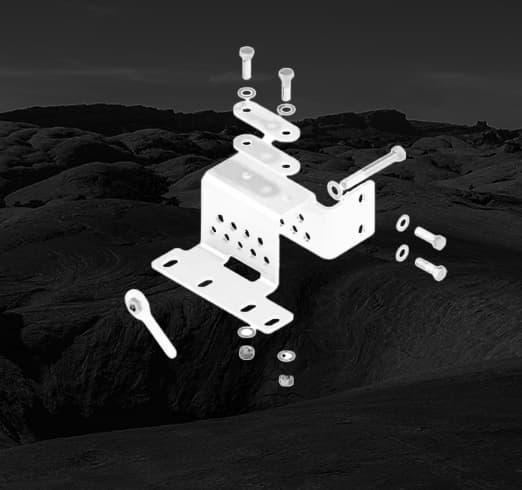
Brackets that flex under load
-
Ovalled bolt holes from movement over time
-
An axle that is not centered after a lift
Suspension Wear Or Poor Geometry
Suspension wear is slow and sneaky. Poor geometry is often immediate. Both can cause steering shake, and they often team up.
Suspension wear shows up as:
-
Cupped tires
-
Wandering at speed
-
Loose feeling in transitions
-
A shake that worsens over time
Poor geometry shows up as:
-
A shake that appeared after a lift or bracket change
-
Bump steer that was not present before
-
Sensitivity to road crown and seams
Geometry problems often involve track bar and drag link angles not working together, caster dropping too low after a lift, or control arm lengths moving the axle without correcting for it.
A lot of the components that influence those relationships live in the broader Jeep suspension, even if the symptom feels like “just a steering wheel shake.”
Alignment Issues
Alignment numbers are not the whole story on a Jeep. A lifted JK can be “aligned” and still drive like it wants to hunt lanes.
Common alignment-related shake triggers include:
-
Low caster, which reduces self-centering and stability
-
Toe settings that drift because a component has moved or loosened
-
Centering the steering wheel without centering the axle first
Alignment should be treated as a system correction step after you confirm hardware is tight and the axle is located correctly.

Is Steering Wheel Shake The Same As Death Wobble?
No, but they live in the same neighborhood. Steering wheel shake is a broad symptom that can include vibration, shimmy, brake feedback, or bump-triggered oscillation.
Death wobble is a violent oscillation that typically triggers after a bump and continues until you slow down significantly.
Death wobble almost always involves a combination of looseness plus geometry that allows oscillation to feed itself.
A Jeep can have steering shake without death wobble. A Jeep with a death wobble is telling you the system has enough movement to become unstable under a trigger.
Treat death wobble as urgent. Treat steering shake as a warning. Both deserve a real diagnosis, not parts darts.
How To Fix Steering Wheel Shake
Fixes work when they match the cause. Start simple, confirm the result, then move deeper.
Tire Balancing And Rotation
For highway shake, start here:
-
Balance all four wheels
-
Inspect wheels for bends and bead damage
-
Rotate front to rear and see if the symptom changes
-
Check for mud or debris inside wheels after trail runs
If you balance and the shake stays identical, do not keep balancing. Move on. If the shake changes, you are closer.
Tightening Or Replacing Worn Components
If something moves, fix that movement. Prioritize the components that locate the axle and control steering input:
-
Track bar bolts, joints, and bracket integrity
-
Tie rod ends and drag link ends with any play
-
Ball joints that allow knuckle shift
-
Unit bearings with wheel movement
-
Brackets that flex under steering input
If bolt holes are ovalized, tightening the bolt alone will not last. Movement will return because the hole is no longer holding the fastener in a consistent position. Correct the mount, then torque properly.

Suspension And Steering Upgrades
Once worn tires and loose components are handled, the problem usually stops being “what’s broken” and starts being “what flexes.” That’s where long-term fixes live.
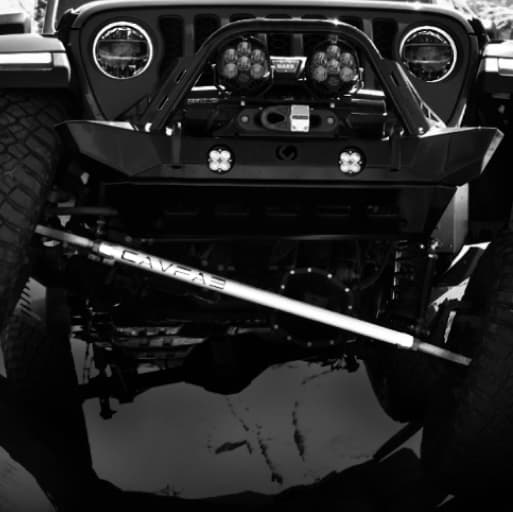
We build steering systems with that exact goal in mind. CavFab steering focuses on stiffness, load control, and geometry that stays put when the Jeep is driven hard.
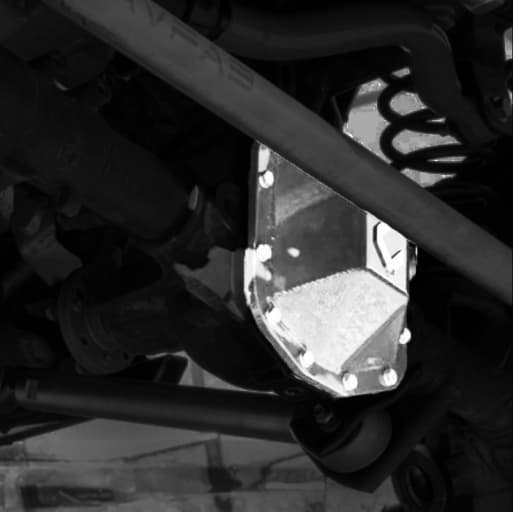
You can see how those pieces come together in our Jeep suspension collection, where every component is designed to limit unwanted movement instead of masking it.
For the best Jeep JK upgrades, choose the 1 Ton Bolt-On Steering System for JK/JKU. It’s built with SOLID 1045 steel and precision MIG-welded construction to hold tighter under the leverage of larger tires and intense trail use.
Conclusion
A shaking steering wheel is your Jeep telling you that something is moving that shouldn't. Sometimes the root cause is tire balance or damage. Often, it is worn joints, loose track bar hardware, bracket movement, or geometry that no longer match the build after a lift.
The real fix is finding the movement, correcting it, and restoring geometry so the Jeep stays calm under load.
Here at CavFab, we build components for Jeep owners who actually use their rigs. We keep engineering and fabrication in-house using American-sourced steel and aluminum, and our parts see real-world abuse.
If you want steering that stays consistent under real use, build with CavFab Jeep parts.
Ready to learn more? Check out these articles: