


Jeep Wrangler Vs Rubicon Difference
The Jeep Wrangler vs Rubicon difference isn't about two separate trucks. Rubicon is a trim level of the Wrangler, not its own model, and that mix-up causes a lot of confusion when people shop used listings.
Once you know that, the real question becomes clear: what hardware does a Rubicon actually add, and does it matter once the Jeep leaves the dealer lot?
The honest answer is that the differences aren't cosmetic. They live in the drivetrain, axles, gearing, traction equipment, and the suspension.
A Rubicon is built to do more on rocks and steep climbs right out of the factory, without a single aftermarket part bolted on. That matters if you're buying second-hand and trying to figure out how much trail capability you're getting for the money, and how much you'd have to add yourself on a standard trim.
What this article covers:
- What's the Difference Between a Jeep Wrangler and Rubicon?
- What This Means When You're Shopping Used
- Is a Rubicon Still a Jeep Wrangler?
What's the Difference Between a Jeep Wrangler and Rubicon?
Most of the meaningful differences show up underneath the Jeep, not on the badge. Standard Wrangler trims run a Dana 30 front axle paired with a Dana 35 or Dana 44 rear, an open differential setup, a Command-Trac transfer case with a 2.72:1 low range, and no sway bar disconnect.
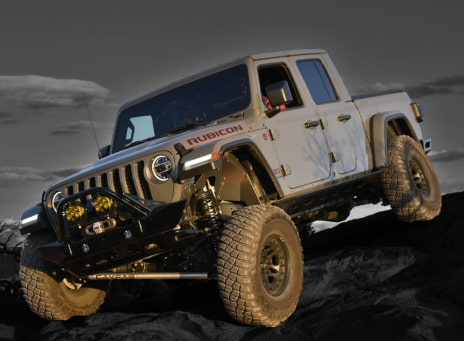
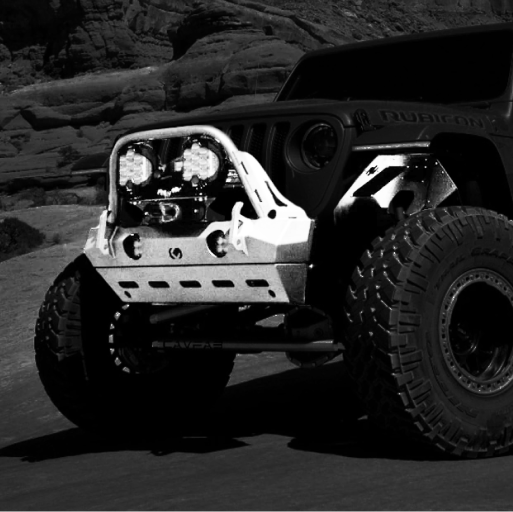
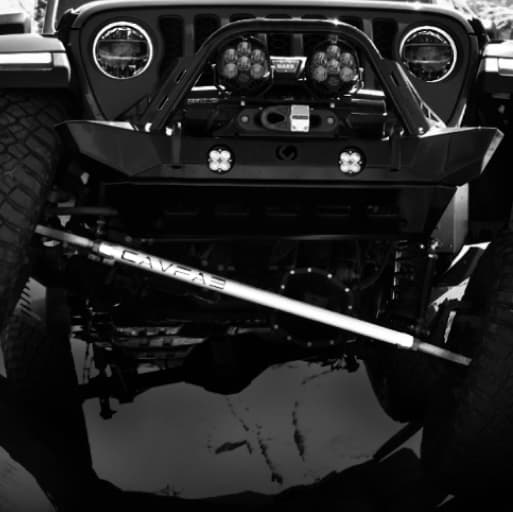
The Rubicon swaps in a Dana 44 front and rear axle, Tru-Lok electric lockers front and rear, a Rock-Trac transfer case with a 4:1 low range, an electronic front sway bar disconnect, 33-inch all-terrain tires, and additional rock rails and skid plating.
Every one of those changes is aimed at the same handful of goals: better traction, more articulation, tougher components, and more control at low speed on technical terrain. None of it changes how either Jeep drives to the grocery store. It changes what happens once the pavement ends, which is exactly what the next few sections walk through piece by piece.

Wrangler vs Rubicon Axles and Locking Differentials
Standard Wrangler trims run a Dana 30 front axle with an open differential, so power splits between both tires on that axle no matter which one actually has grip. The Rubicon pairs a stronger Dana 44 AdvanTEK front axle with a matching Dana 44 rear. Dana, the original equipment axle supplier for Jeep, built the AdvanTEK line to handle the added stress of serious off-road use.
The bigger functional difference is the locking differential. A standard Jeep differential sends power to whichever tire has the least resistance, which is exactly the tire that's spinning uselessly in the air over a rock or a rut.
Rubicon models replace that setup with Tru-Lok electronic lockers front and rear, which force both tires on an axle to spin at the same speed once engaged. That keeps power going to the tire that's still touching dirt instead of the one that isn't.
From our experience helping owners troubleshoot traction complaints, a locked axle solves more stuck-Jeep situations than any amount of extra horsepower ever will.
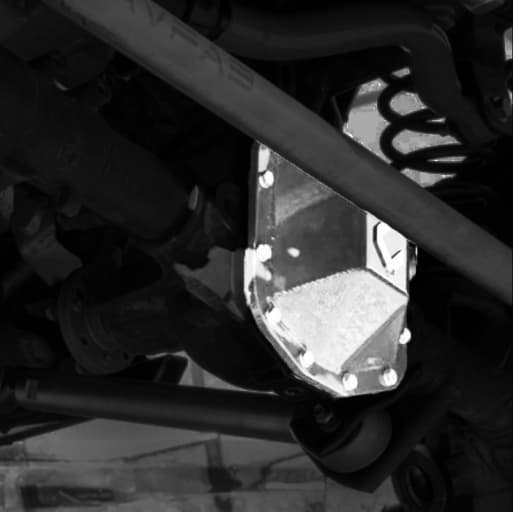
If you're shopping a used Rubicon, check that the axles still have their factory Jeep differential covers and haven't been swapped for a lower-spec setup. A Dana 44 diff cover is one of the most common upgrades once owners on either trim start pushing bigger tires and need extra protection for the ring and pinion.

Wrangler vs Rubicon Transfer Case and Crawl Ratio
Standard Wrangler trims use a Command-Trac transfer case with a 2.72:1 low-range gear ratio, which works fine for dirt roads and moderate trails.
The Rubicon's Rock-Trac transfer case is a two-speed unit with a 4:1 low range instead. That gearing, detailed in Jeep's own capability specs, combines with the axle ratio to push the Rubicon's crawl ratio well into triple digits on manual-transmission models, well beyond what a standard trim's Command-Trac setup produces.
A higher crawl ratio means more torque multiplication at very low speeds. In practice, it lets a driver creep over a ledge or descend a steep grade using engine braking alone, without riding the brake pedal the whole way down.
A standard Wrangler can still crawl, just with less margin before the driver needs to add throttle or brake input. Specifications shift between model years and transmission choices on both trims, so always confirm the exact crawl ratio for the generation and drivetrain you're looking at rather than assuming one number applies across the board.
Wrangler vs Rubicon Sway Bar and Suspension
Every Wrangler trim except Rubicon keeps its front sway bar permanently connected. A sway bar ties the left and right sides of the suspension together to keep the vehicle from leaning too far in corners, which is great on the highway.
On the trail, it limits how far one wheel can drop or climb independently of the other, which costs a standard Wrangler articulation exactly when it needs it most.
The Rubicon's electronic front sway bar disconnect solves that. At the push of a button, it decouples the sway bar so each front wheel can move independently, letting the suspension flex further and keep more tires in contact with uneven ground.
We've found that this one feature accounts for a surprising share of the Rubicon's reputation on technical trails, since it improves traction without adding a single extra part.
Pair that with the Rubicon's factory-tuned suspension, and you get more usable wheel travel than a standard trim offers before any lift or upgraded Jeep Wrangler suspension components enter the picture on either Jeep.

Wrangler vs Rubicon Tires, Clearance, and Trail Protection
Standard Wrangler trims ship with smaller, more street-oriented all-terrain tires, which keep the ride quieter but limit ground clearance and approach angle. Rubicon models come standard with 33-inch all-terrain tires instead, which sit larger than what ships on other trims and immediately improve clearance over obstacles.
Trail protection follows the same pattern. A standard Wrangler typically ships with limited or optional skid plating. The Rubicon adds factory rock rails to protect the rocker panels and additional skid plating to shield the fuel tank, transfer case, and other components underneath.
Not every piece of protection comes from the Rubicon trim itself, since some skid plating and armor packages are optional add-ons across multiple trims depending on model year, so check the window sticker or build sheet on either Jeep rather than assuming.
Aftermarket Jeep skid plates remain one of the most common upgrades for owners on any trim who want protection a factory package didn't include.
Do Wrangler and Rubicon Engines Differ?
Choosing a Rubicon doesn't automatically mean more horsepower. Engine and transmission availability generally overlaps across Wrangler trims, with the same V6 and turbocharged four-cylinder options offered on Rubicon as on Sahara and Sport, depending on the model year.
The real advantage sits in the axles, transfer case, and suspension hardware, the parts that put power to the ground on terrain a standard trim would struggle with.
If raw power is the priority, check the specific engine and transmission combination on the individual Jeep rather than assuming the trim name tells you anything about output.

What This Means When You're Shopping Used
Knowing what separates these trims mechanically matters most at the moment you're standing in front of a used listing. Factory hardware doesn't always stay factory, and trim badges don't always tell the full story on either Jeep.
Start with the axles. A genuine Rubicon Dana 44 carries specific markings on the axle tube, and the Tru-Lok lockers have a dash-mounted switch, so confirm both are present and functional rather than trusting the trim badge alone.
It's also common to find a standard-trim Wrangler with an aftermarket locker already installed, which can close some of the traction gap without the rest of the Rubicon's factory equipment.
Check service records for any drivetrain swaps on either vehicle, and inspect the Jeep differential covers for aftermarket parts that suggest prior axle work.
Test the sway bar disconnect on any used Rubicon before you buy. It's an electronic and vacuum-actuated system, and it's one of the more common items to fail quietly on an older JK or JL without leaving an obvious warning light. Cycle it with the vehicle stationary and confirm it re-engages when you speed up, since a stuck-disconnected sway bar changes highway handling.
Finally, check tire size and wear against the factory spec sheet, whichever trim you're looking at. A worn set of replacement tires smaller than the Rubicon's factory 33-inch fitment tells you the previous owner may have already started undoing some of that trail advantage.
Oversized tires on a standard Wrangler usually mean the opposite: the steering has already been reinforced to handle them, commonly with something like our 2.5 Ton Bolt-On Steering System for JL and JT platforms, so ask the seller what steering work was done if the tires look bigger than stock.
Is a Rubicon Still a Jeep Wrangler?
Yes. A Rubicon is a Wrangler with additional factory hardware, not a separate vehicle. The Wrangler lineup includes multiple trims, from Sport and Willys up through Sahara and Rubicon, and each one balances daily comfort against off-road capability differently.
Shoppers weighing a Jeep Sahara vs Wrangler decision are really asking the same underlying question this article answers: how much factory trail hardware do you want to pay for up front, versus adding it yourself later.
Conclusion
The Jeep Wrangler vs Rubicon difference comes down to a specific list of hardware added to the same base platform: Dana 44 axles, Tru-Lok lockers, a Rock-Trac transfer case with 4:1 low range, an electronic sway bar disconnect, larger tires, and extra trail protection.
None of it is cosmetic, and knowing how each piece actually works is the best tool you have when inspecting a used Wrangler or Rubicon rather than just reading a window sticker.
If you're weighing the value question, cost, and which trim to actually buy, our full breakdown in Jeep Wrangler vs Rubicon covers that side in detail.
At CavFab, we build American-made Jeep parts for owners who want trail capability that holds up, no matter which trim you start from.