


What Axles Are In My Jeep JK?
If you are asking what axles are in my Jeep JK, you are probably doing one of two things: diagnosing a front-end issue or planning upgrades like gears, lockers, steering, or tire size.
Either way, knowing what is under your rig saves money and prevents buying parts that do not fit.
The Wrangler JK platform is refreshingly simple on axles compared to newer models. Almost every JK shares the same front axle baseline, while rear axles vary slightly by early production year and trim level. Here's how to determine where you stand.
What this article covers:
- Quick Answer: Stock Jeep JK Axle Types by Model
- How to Identify the Axles in Your Jeep JK
- Jeep JK Factory Axle Breakdown (Year-by-Year)
- Jeep JK Front Axles
- Jeep JK Rear Axles
Quick Answer: Stock Jeep JK Axle Types by Model
Here is the fast trim-based breakdown Jeep JK owners usually need. This covers factory axles only, not aftermarket swaps.
- 2-door JK Sport / Sahara: Dana 30 front; Dana 44 rear on almost all models, with a small number of early 2007 two-doors using a Dana 35 rear.
- 4-door JK Unlimited Sport / Sahara: Dana 30 front; Dana 44 rear. Jeep standardized the Unlimited on the 44 rear early in production.
- JK Rubicon: Dana 44 front and Dana 44 rear.
- Special editions (X, Moab, 10th Anniversary, Hard Rock): Most follow their parent trim axle package. Many special editions were Rubicon-based and therefore Dana 44 front and rear, but always confirm using the identification steps below, as packages can vary.

How to Identify the Axles in Your Jeep JK
Trim charts get you close, but the Jeep in your driveway is the source of truth. This is how to confirm what you have.
Front axle identification:
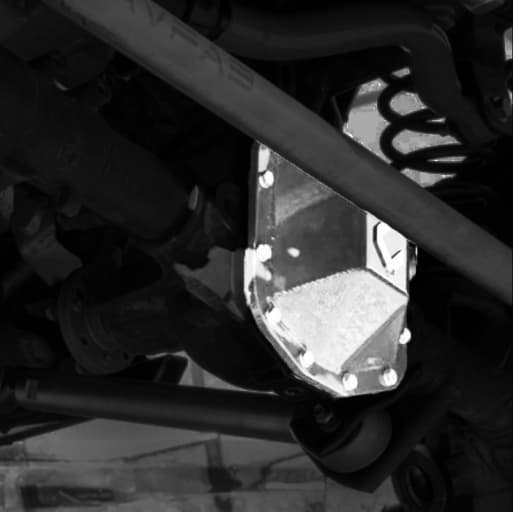
Every JK front axle is either a Dana 30 (most trims) or a Rubicon Dana 44. The quickest visual check is the differential cover and casting. Dana 30 covers are more oval, while Dana 44 covers have flatter sides and a slightly more angular shape.
If the cover shape is hard to read, look for axle tags or tube stampings near the center section.
Rear axle identification
JK rears are nearly always Dana 44, except for a small batch of early 2007 two-door models that shipped with Dana 35. Dana 35 rear covers are more rounded, while Dana 44 rear covers mirror the flatter Dana 44 shape.
Visual cues to use under the Jeep:
- Axle tube size: Dana 44 tubes are typically larger in diameter than Dana 35, though this is a supporting clue, not a solo decider.
- Differential cover shape: Fastest on-trail method if the axle is dirty or the tags are gone.
- Casting marks and stampings: Many axles have casting numbers on the housing or stampings on the tube that you can cross-reference.
- Axle tags and ratio labels: A metal tag under a cover bolt often lists axle model and gear ratio.
- VIN-based lookup: Your factory build sheet will confirm axle model and gearing. Jeep dealers or reputable VIN decoders can pull this.

Jeep JK Factory Axle Breakdown (Year-by-Year)
JK axles did not change much across the generations, which is why parts compatibility is straightforward.
2007 to 2011 model years:
- Dana 30 front on Sport, Sahara, and most special editions.
- Dana 44 front only on Rubicon.
- Rear was Dana 44 on nearly all JKs, with a rare early-2007 exception using Dana 35.
2012 to 2018 model years:
- Dana 30 front remained standard on non-Rubicon trims.
- Rubicon kept Dana 44 front and rear.
- Rear Dana 44 was fully standardized across trims.
If you are not in a Rubicon, your front is Dana 30. If you are in a Rubicon, your front is Dana 44. Rear axle differences are basically an early-production footnote.
Jeep JK Front Axles
Front axle choice matters because it dictates steering geometry loads, shaft and u-joint stress, and how confidently you can step up tire size without chasing failures.
That's also why a Jeep JK steering components diagram is so useful when you're diagnosing wander or planning linkage upgrades; the axle and steering system work as one unit.
On a JK, the front axle also sets your ceiling for lockers and gearing before you need reinforcement.
Dana 30 (Standard Front Axle)
The Dana 30 is the factory front axle on all non-Rubicon JK trims. At stock tire sizes, it's a dependable setup for daily driving and moderate trail use, but its weaker points show up as tire size and traction increase.
Running 35s and aggressive terrain adds leverage to the inner shafts, u-joints, ball joints, and steering linkage, which is why many JK owners reinforce or upgrade when they commit to bigger tires or harder lines.
If you're planning gears, lockers, or a stronger steering system, it helps to start with axle-matched parts and ratios.
CavFab's Jeep differential collection is a solid reference point for JK-friendly axle components and gearing support.

Dana 44 (Rubicon Front Axle)
Rubicon JKs use a Dana 44 front axle. The big advantage is extra strength headroom for lockers, gearing, and bigger tires without needing the same level of reinforcement a Dana 30 often requires.
The Dana 44 center section is larger and built to tolerate higher torque loads, which is why Rubicon owners can typically push tire size and trail aggression further before seeing shaft or housing limitations.
Even with the stronger axle, steering and ball joints still feel the extra leverage from heavier tires, so upgrades often follow once you move into 37-inch territory.
If you're cross-shopping parts, remember that most JK front-end components are axle-specific, so using the right JK-focused category, like Jeep JK axles, keeps your build decisions clean and compatible.
Jeep JK Rear Axles
The rear axle is where JKs gained strength compared to earlier Wranglers, which is why they generally tolerate larger tires better out back.
Rear axle identification still matters, though, because gear sets, locker options, and tire-carrier leverage all depend on what housing you actually have.
Dana 35 (Occasional Base Models, Rare)
A very small number of early-2007 two-door JKs shipped with a Dana 35 rear axle. If you have one, it's worth confirming before you re-gear, add a locker, or hang a heavy spare off the back.
The Dana 35 can live a long time on stock tires, but it has less margin for heavy tire weight and high-traction wheeling, especially once tire diameter and wheel offset climb.
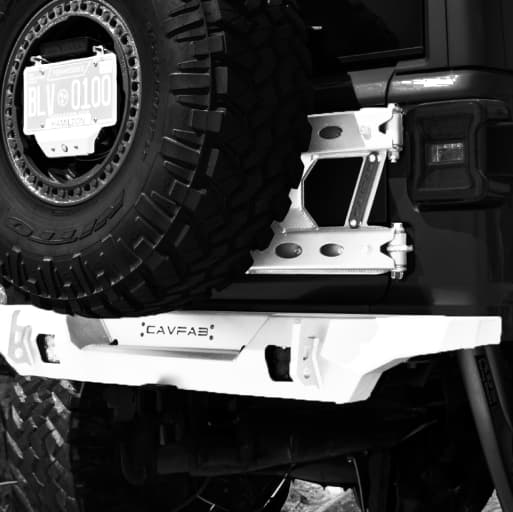
If you're running a heavier spare, choosing the best Jeep JK tire carrier matters even more on a Dana 35 because added rear leverage can accelerate wear.

Dana 44 (Most JK Rear Axles)
Nearly every JK, Sport, Sahara, Unlimited, and most special editions use a Dana 44 rear. It's the axle the JK aftermarket largely builds around, and it handles larger tires and towing loads better than the older Dana 35 design.
For most owners, this rear axle is the reason 35s feel like a normal, stable upgrade on a JK without needing immediate rear reinforcement.
Dana 44 Rubicon (Upgraded Locker + Stronger Components)
Rubicon rear Dana 44s include factory locker hardware and Rubicon-specific internals.
That matters if you're rebuilding the locker, swapping gears, or ordering axle-specific parts, because the Rubicon variant can have different carrier and electronics considerations.
If your JK is a Rubicon, confirm you're ordering Rubicon-compatible gear and locker components before you tear into the housing.
Conclusion
Once you know what axles are in your Jeep JK, you can plan smarter. Axle model affects everything downstream: steering stress, gear compatibility, locker options, and how confidently you can size tires without chasing failures.
If you are building toward stronger traction or gearing, start by matching your axle to the right Jeep parts and support systems.
CavFab's Jeep differential collection is a good place to line up axle-specific components, and our Jeep suspension lineup helps keep geometry in check when tire size and trail load go up. Whatever your Jeep needs, we've got you covered.
Ready to learn more? Check out these articles: