


Honda Ridgeline vs Jeep Gladiator: Pick by Terrain
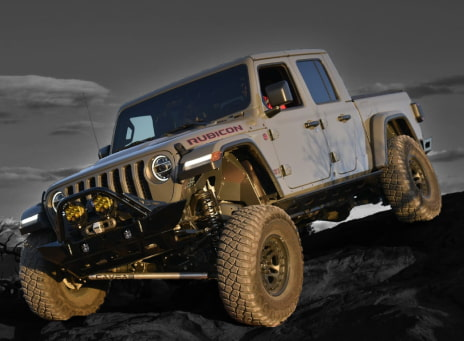
In a Honda Ridgeline vs Jeep Gladiator matchup, the Gladiator wins on rocks, sand, and steep ledges. It has far more ground clearance (the gap between the ground and the truck’s lowest part) and low gearing for slow climbs. The Ridgeline suits pavement, gravel, and snow, and uses a little less gas. If you mostly drive on pavement, gravel, and snowy roads, the Ridgeline is a sensible choice, since it’s built more like an SUV and uses a little less gas.
Ridgeline vs. Gladiator Specs and Components
The Ridgeline has unit-body construction, which means that its body and frame are made as a single piece, like most cars. Each of its four wheels has independent suspension, so each one moves up and down on its own. The Gladiator’s body sits on a separate steel frame, and it has a solid axle (one rigid beam linking the left and right wheels) at the front and rear, which no other midsize pickup has. When one wheel climbs a rock, the axle pivots and forces the wheel on the other side down, so both tires keep their grip.
The two trucks send power to the wheels differently, too. The Ridgeline’s i-VTM4 all-wheel drive shifts power between the wheels by itself, and you can switch to Normal, Snow, Sand, or Mud mode to suit the road. Most Gladiators use part-time four-wheel drive, which you switch on when you need it, and some trims offer full-time 4x4. Every Gladiator has a low range (a set of extra-low gears for slow climbs).
| Truck | Body | Suspension | Drive System | Low Range | Max Ground Clearance |
|---|---|---|---|---|---|
| 2026 Honda Ridgeline | Unit-body | Independent, front and rear | All-wheel drive (i-VTM4) | None | 7.64 in |
| 2026 Jeep Gladiator | Separate frame | Solid axles, front and rear | Part-time or full-time four-wheel drive | 2.72:1, or 4:1 on the Rubicon | 11.6 in (Mojave) |

Which Truck Fits Your Terrain?
Each truck is at its best on different ground, and the gap between them grows the rougher the trail gets.
Daily Driving and Hauling
On pavement, you’ll spend a little less on gas in the Ridgeline. Its EPA rating (the fuel economy figure from standardized U.S. government lab tests) is 18 mpg (miles per gallon) city, 24 highway, and 21 combined, against 17, 22, and 19 for the Gladiator.
The Ridgeline’s bed is 64 inches long, with 50 inches between the wheel wells (the humps over the rear wheels), against the Gladiator’s 60.3 and 44.8. Under the bed floor, you get a lockable 7.3-cubic-foot trunk for tools you’d rather keep out of sight.
When you hitch up a trailer, the Gladiator is the stronger truck. A Gladiator Sport S is rated to tow up to 7,700 lb, while every Ridgeline tops out at 5,000 lb.
Snow, Mud, and Gravel Roads
You’ll be fine in either truck on snowy, muddy, or gravel roads. The Ridgeline’s all-wheel drive is always on, and the TrailSport (Honda’s off-road trim) adds all-terrain tires.
The gap opens up on rutted trails, where other vehicles’ tires have worn deep grooves (ruts) into the mud or snow, leaving a high ridge in the middle that drags on a low truck’s underside. A Gladiator Rubicon (Jeep’s rock-crawling trim) has up to 11.1 inches of ground clearance against the Ridgeline’s 7.64, so it rides over that ridge.
Rocky Trails
Rocks are where the two trucks are furthest apart. You can judge what a truck can climb by three angles, and a bigger number is better for all of them. The Gladiator figures are for the Rubicon, and the Ridgeline’s are the same on every trim:
- Approach angle: How steep a slope the front can climb onto before the bumper hits it. The Rubicon’s front can climb onto a 43.4° slope, against 20.4° for the Ridgeline.
- Breakover angle: How sharp a hump the truck can roll over before its middle scrapes. The Rubicon can roll over a 20.3° hump, against 19.6° for the Ridgeline.
- Departure angle: How steep a drop the rear can come off before the back end drags. The Rubicon’s rear can come off a 26° drop, against 19.6° for the Ridgeline.
Gearing is the other big gap. The Ridgeline has no low range, so you can’t creep up a steep ledge as slowly as you can in a Gladiator. In a Gladiator Rubicon, the 4:1 low range, which it shares with the Wrangler Rubicon, turns the wheels four times more slowly for the same engine speed, so the engine does the work while you pick your path. Its crawl ratio, which measures how slowly it can creep in its lowest gear, goes up to 77:1.

Sand and Desert Roads
In soft sand, your tires sink in and the underside of the truck sits closer to the sand, so the more ground clearance you start with, the less likely you are to drag and get stuck.
The Gladiator Mojave (Jeep’s trim made for desert driving) has the most ground clearance of any Gladiator, at 11.6 inches. It also has FOX internal-bypass shocks that stiffen as they compress, so the truck doesn’t slam down on big bumps at speed. The Ridgeline has a Sand mode for soft ground, but with 7.64 inches of clearance, its underside is more likely to drag in deep sand.

Protecting the Gladiator’s Approach and Departure Angles
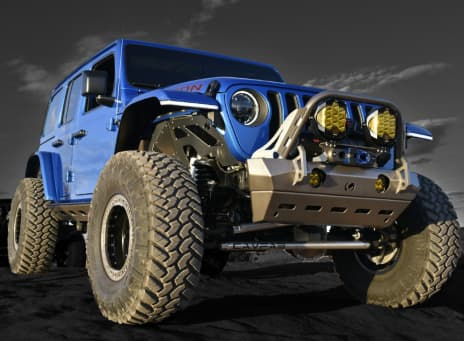
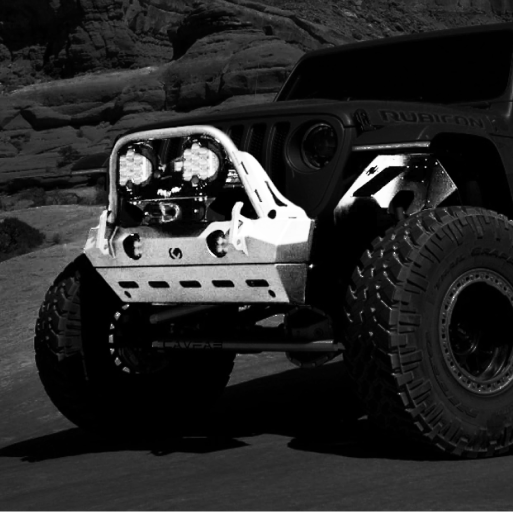
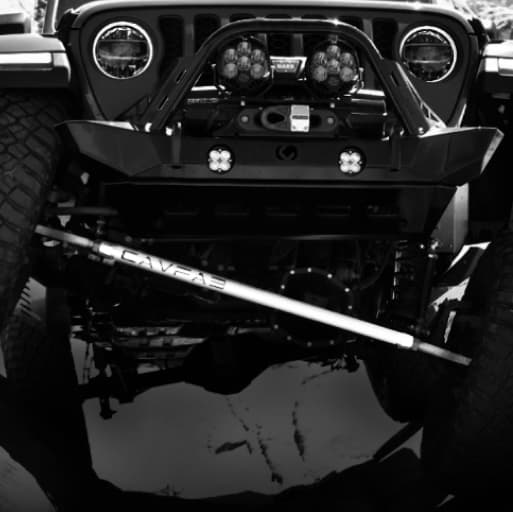
Your bumpers are the first parts to meet the rock on a steep climb or drop, so we design ours to function first and looks second. With a mid-width Gladiator front bumper, you get more tire clearance and a better approach angle than with a full-width one.
Our Crawler Series Mid-Width Front Bumper fits the Jeep Wrangler JL as well as the Gladiator. It also has room for a winch, which is a motorized drum of cable or rope that you hook to a tree or another vehicle to pull your truck free when it’s stuck. Its recessed winch mount (a bracket set into the bumper to hold the winch) fits most winches rated up to 12,000 lb.
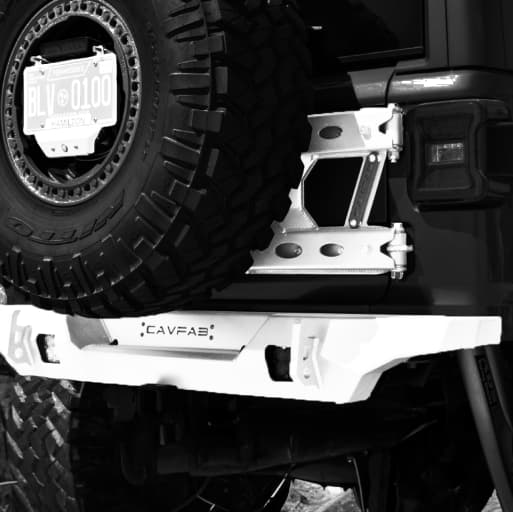
At the back, the JT Rear Ultra Clearance Bumper comes with a high-clearance 2-inch hitch that sits 5.7 inches higher than the stock hitch, so it’s less likely to catch on rock as you come off a ledge. It’s cut and formed from 3/16-inch American steel. Whichever Gladiator suits your terrain, whether that’s the Rubicon for rocks or the Mojave for sand, bumpers that clear more rock mean you can use more of the approach and departure angles it came with.
Frequently asked questions
Can a Ridgeline tow more than 5,000 lb?
No. Every 2026 Ridgeline is rated for 5,000 lb with Honda’s towing equipment. For anything heavier, you’ll need a truck with a higher rating, like a Gladiator Sport S at up to 7,700 lb or a Nissan Frontier King Cab S at up to 7,150 lb.
Does ground clearance drop when you load the bed?
Yes. Ground clearance is the gap between the ground and the lowest part of the truck, and the published figure is measured unladen (with no passengers or cargo), so a full cab and bed bring the underside closer to the ground. On a loaded trip, leave more room over rocks and ruts than the published number.
How deep can you drive a Gladiator or a Ridgeline through water?
The Gladiator is rated to ford (drive through) water up to 31.5 inches deep. Honda doesn’t publish a fording rating for the Ridgeline. Only cross when you know how deep the water is, and check your owner’s manual for your truck’s exact rating.
Can you take a Ridgeline TrailSport off-road?
Yes, on light trails. The TrailSport is Honda’s off-road trim of the Ridgeline, and it adds all-terrain tires and off-road-tuned suspension, but its ground clearance stays at 7.64 inches and it has no low range, so rocky trails and deep sand are better left to a Gladiator.