


Ford Bronco Sport vs Jeep Wrangler
The Ford Bronco Sport vs Jeep Wrangler debate may sit in the same shopper conversation, but they don't start from the same blueprint. One is a compact crossover with trail-friendly tuning. The other is a purpose-built 4x4 with hardware designed for bigger upgrades and harder use.
The Bronco Sport makes sense for drivers who want weekday comfort with weekend dirt-road confidence. The Wrangler makes more sense for builders who see stock capability as the starting point, not the finish line.
Before the trail talk gets too loud, let's start with the specs that separate these two platforms.
What this article covers:
- Quick Comparison: Bronco Sport vs Wrangler Specs
- Platform and Build: Crossover vs True Off-Road SUV
- Off-Road Capability
- Strength and Durability
- Aftermarket Support and Customization
Quick Comparison: Bronco Sport vs Wrangler Specs
Here is how the Bronco Sport and Wrangler compare at a structural and capability level.
|
Spec |
Ford Bronco Sport |
Jeep Wrangler |
|
Platform |
Unibody crossover (car-based) |
Body-on-frame SUV (truck-based) |
|
Drivetrain |
AWD with electronic control |
True 4x4 with low-range transfer case |
|
Ground Clearance |
~7.8 to 8.8 inches (depending on trim) |
~9.7 to 12.9 inches (depending on trim and tires) |
|
Towing Capacity |
Up to 2,200 lbs |
Up to 3,500 lbs (4-door) |
This table highlights the core difference early. The Bronco Sport is optimized for versatility and comfort, while the Wrangler is built for mechanical capability and terrain adaptability.

Platform and Build: Crossover vs True Off-Road SUV
Everything about how these vehicles perform starts with how they are constructed. This is where the Bronco Sport and Wrangler separate immediately, even before you get into specs or features.
Ford Bronco Sport
The Bronco Sport uses a unibody platform, which is closer to a traditional SUV crossover than a dedicated off-road SUV. That design prioritizes weight savings, ride comfort, and everyday usability.
In real-world use, that translates to a platform that feels stable and predictable on-road and handles light off-road conditions without much effort.
- The integrated body and frame improve ride quality and reduce overall vehicle weight.
- Suspension mounting points are designed for efficiency and packaging, not repeated heavy impact.
- The platform performs well on gravel roads, snow, and mild trails where terrain remains relatively consistent.
- Chassis flex is distributed across the body, which works fine for light use but is not ideal for sustained articulation.
Jeep Wrangler
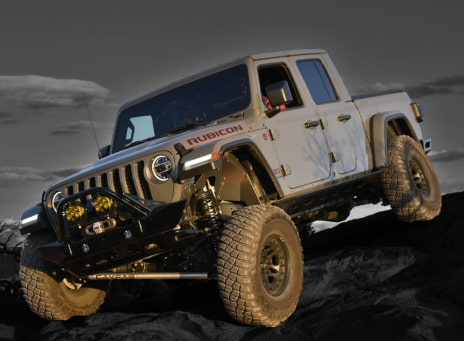
The Wrangler uses a body-on-frame design paired with solid front and rear axles. That combination is built specifically for handling uneven terrain and repeated mechanical stress.
Instead of prioritizing comfort, the Wrangler is designed to maintain structural integrity and traction when the ground stops cooperating.
- A separate frame absorbs impacts and twisting forces without transferring stress into the body.
- Solid axles keep both wheels connected, maintaining strength under load and improving articulation.
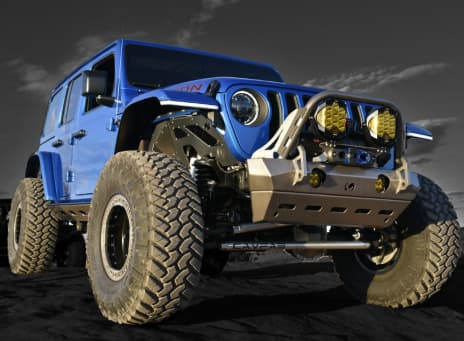
- The chassis is designed to support larger tires, added weight, and aggressive upgrades.
- The platform tolerates long-term modification without compromising durability.
Verdict
Wrangler is the only true off-road platform.
The Wrangler's body-on-frame construction is what makes it a long-term build platform. It provides the foundation needed for upgrades like Jeep suspension and Jeep armor without creating structural weak points.

Off-Road Capability
Once you leave pavement behind, the difference between these two platforms becomes clear. Both can handle off-road conditions, but they're designed for very different levels of difficulty.
Ford Bronco Sport
The Bronco Sport is capable within a defined range and performs well in environments where traction matters more than articulation.
Ford's G.O.A.T. Modes help adjust throttle response and drivetrain behavior for different surfaces, while the Badlands trim adds more serious trail hardware, including an advanced 4x4 system with a twin-clutch rear-drive unit.
It's built more for accessible off-road use rather than technical terrain.
- AWD systems manage traction effectively on dirt roads, sand, and snow.
- Terrain management modes adjust throttle response and torque distribution automatically.
- The vehicle performs best when maintaining momentum rather than crawling over obstacles.
- Limited suspension travel reduces effectiveness on uneven terrain.
- Tire size restrictions limit clearance and obstacle capability.
The Bronco Sport's AWD system doesn't include a true low-range transfer case, which limits torque multiplication and low-speed control compared to the Wrangler.
Jeep Wrangler
The Wrangler is built around mechanical traction and control, which becomes critical as terrain becomes more technical.
Instead of relying on electronics, it uses hardware to maintain grip and stability.
- Solid axles allow for greater articulation, keeping tires in contact with uneven surfaces.
- Low-range gearing provides controlled movement at slow speeds.
- Locking differentials and sway bar disconnect systems improve traction on rocks and steep climbs.
Verdict
Wrangler dominates for serious off-roading.
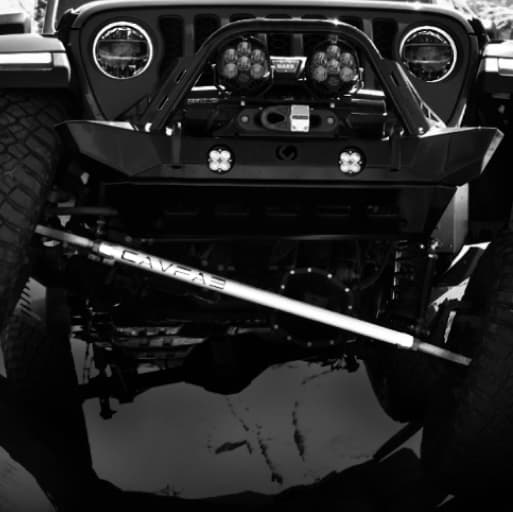
As trails become more technical, Wrangler owners often move beyond factory capability. Upgrading components like Jeep control arms and Jeep track bars helps maintain proper geometry and stability as lift height and tire size increase.
Strength and Durability
If offroading is the goal, strength and durability are major deciding factors. Here's how the Bronco Sport and Wrangler compare.
Ford Bronco Sport
The Bronco Sport is designed for moderate off-road use, and it performs well within that range. The limitation isn't immediate failure but rather long-term fatigue under repeated stress.
- Unibody construction distributes load across the chassis, which limits how much flex it can handle over time.
- CV axles handle moderate articulation well, but repeated high-angle articulation and heavy loads can accelerate wear compared to solid axle setups.
- The platform handles occasional off-road use well, but not sustained abuse.

Jeep Wrangler
The Wrangler is built around a simpler, more durable architecture that has been proven over decades. It's designed to absorb stress rather than avoid it.
- A dedicated frame handles structural loads independently from the body.
- Solid axles manage torsional stress and direct impacts more effectively than independent setups.
- The drivetrain is designed to support larger tires and increased torque demands.
- The platform tolerates incremental upgrades without exposing weak points.
Verdict
Wrangler wins for durability.
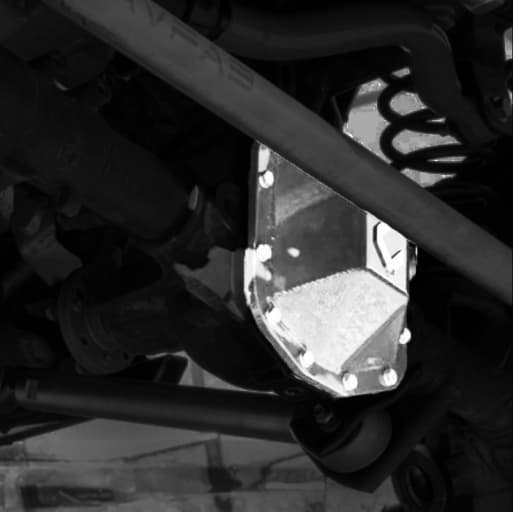
Off-road driving puts significant strain on underbody components, and the Wrangler delivers. For serious builders, upgrades often include reinforced diff cover, full Jeep skid plates, and integrated Jeep armor to protect critical systems.
Aftermarket Support and Customization
This is where the difference between these platforms becomes undeniable once you start planning a build.
Ford Bronco Sport
The Bronco Sport has a growing aftermarket, but it remains focused on light-use upgrades. It's not designed as a long-term build platform.
- Most available upgrades focus on aesthetics, light overlanding, or minor performance gains.
- Heavy-duty suspension and drivetrain upgrades are limited.
- Custom fabrication becomes necessary sooner for more aggressive builds.
Jeep Wrangler
The Wrangler has one of the most mature aftermarket ecosystems in the off-road world, supported by a large and experienced Jeep community.
- Extensive support exists across TJ, JK, JL, and Gladiator JT platforms.
- Builders can scale from basic upgrades to fully built trail rigs.
- Parts are available across all price levels, from entry-level to custom fabrication.
- The platform supports staged builds without replacing earlier upgrades.
- Community knowledge reduces trial and error significantly.

Verdict
From the work we do and the rock crawlers we meet on the regular, the Jeep Wrangler wins by a wide margin.
The Wrangler's biggest advantage is how easy it is to build and how many options you have. Owners can start with foundational Jeep Wrangler parts and expand into broader Jeep parts.
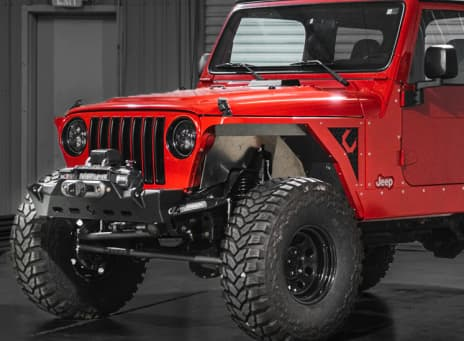
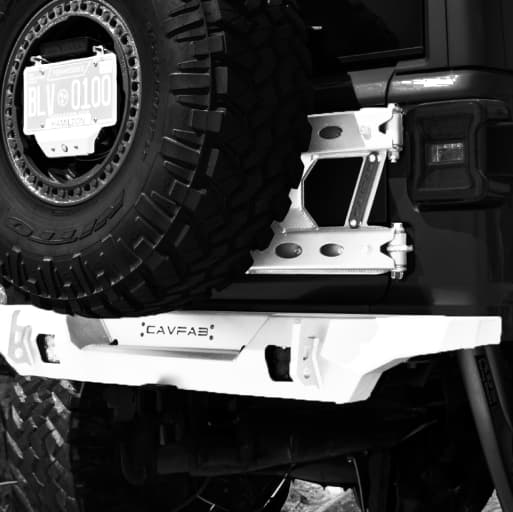
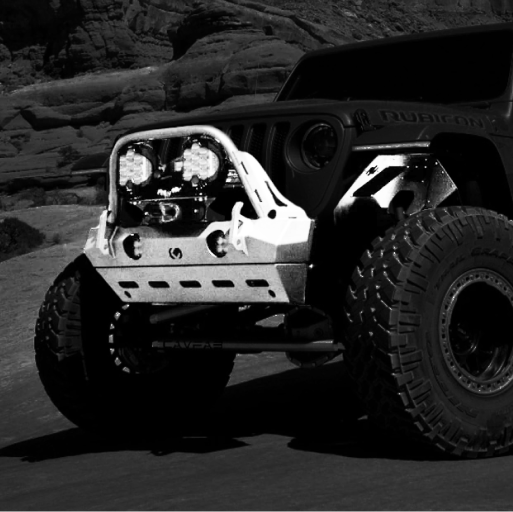
From there, upgrades like Jeep bumpers and Jeep fenders tie the build together into a system that has already been tested in real trail conditions.
Conclusion
The Bronco Sport delivers comfort and enough capability for dirt roads, snow, and weekend exploring. The Wrangler, on the other hand, is built for terrain that demands articulation, strength, and mechanical traction.
Even when stepping up to comparisons like the Ford Bronco vs Jeep Wrangler, the same pattern holds: the Wrangler remains the stronger platform for serious off-road use and long-term builds.
At CavFab, we build for Jeep owners who plan to go beyond stock capability. When your build starts pushing into tougher terrain, the right components make the difference between getting through and getting stuck.
Whether you are dialing in Jeep Wrangler suspension, upgrading protection with Jeep Wrangler bumpers, improving clearance with Jeep Wrangler fenders, or building out your setup with Jeep Wrangler parts, we focus on strength and long-term durability where it actually matters.