


Best Upgrades for Jeep Wrangler
If you're looking for the best upgrades for Jeep Wrangler, you're probably already past bolt-on appearance mods. You want a rig that tracks straight on broken pavement and survives the kind of trail miles that bend factory steering.
JK, JL, and JT owners all run into the same mechanical reality. When you add tire, weight, lift, or traction, you multiply leverage across the steering and drivetrain.
The best builds reinforce what takes the most load, then add capability on top.
Think about your Jeep like a system, not a parts list. Strengthen what takes the most abuse first, then add height, tire, and traction once the foundation can handle it. That's how you avoid doing the same job twice.
What this article covers:
- Steering Upgrades for Jeep Wrangler
- Suspension Upgrades for Jeep Wrangler
- Axle and Drivetrain Upgrades
- Brake Upgrades for Larger Tires
- Tire and Wheel Upgrades
- Armor and Protection Upgrades
- Recovery and Trail Support Upgrades
Steering Upgrades for Jeep Wrangler
If you plan to run 35-inch tires or larger, a heavy-duty steering system is one of the best upgrades you can make to your Jeep Wrangler.
Factory steering components are engineered around stock tire diameter and stock leverage. Once you increase tire size and traction, the steering linkage absorbs significantly more load at low speed, especially when a tire binds against rock or climbs a ledge.
Upgrade Tie Rod and Drag Link Systems Before You Add Lift
For most Jeep builds, reinforced tie rod and drag link systems should come before lift height because steering is usually the first place added leverage shows up.
When factory linkage flexes, it usually doesn't snap. It bends just enough to let toe change under load, which can mean wandering at speed, uneven tire wear, and a steering wheel that never quite feels centered.

What to Look for in a Steering Upgrade on 35s+
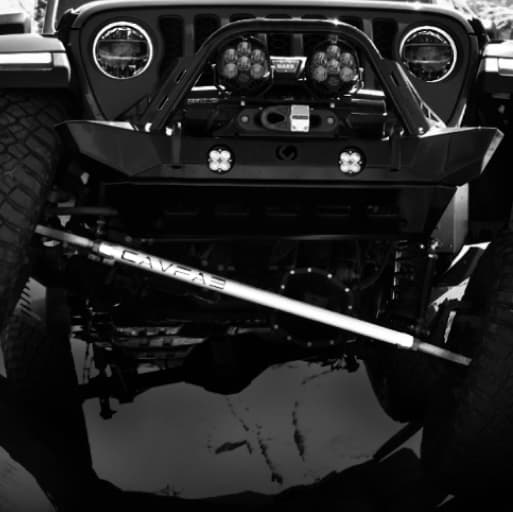
A stronger system needs stiffness, consistent geometry, and reliable hardware, not just a larger-looking tube. Something like the 1 Ton Steering System Tie Rod & Drag Link - BOLT ON - Jeep JK, which James, a verified reviewer, described as a “heavy-duty” part that “should last a long time.”
Solid bar stock resists bending far better than hollow tube of similar diameter. DOM tubing has a role, but it remains hollow, and hollow components can deflect under bind.
Look for:
- Solid bar construction instead of hollow tubing
- Reduced reliance on welded bungs or thin-wall transitions
- High-quality rod ends with proper thread engagement
- Hardware that holds torque under vibration
A CNC-machined linkage built from solid steel bar stock holds alignment more consistently and reduces the constant correction you feel on washboard roads and rocky climbs.
Steering also doesn't live by itself. Once you add lift height and change control arm angles, the steering system has to hold alignment while the axle cycles through travel.
That interaction is why steering upgrades pair naturally with broader Jeep suspension setup and geometry correction.
After you install the upgraded linkage, treat inspection as part of the upgrade. Even strong Jeep Wrangler parts will loosen over time if you skip re-torque and clearance checks.
Practical shop checks include:
- Check rod-end play at full droop and compression
- Verify jam nut torque and witness marks
- Cycle lock-to-lock with the Jeep on the ground
- Inspect clearance near the differential housing and track bar
- Re-torque after the first few hundred miles, then before hard trail weekends

Add a Steering Stabilizer for Comfort, Not as a Structural Fix
A steering stabilizer is a refinement upgrade, not a structural one. It reduces kickback when a tire hits a rock edge and smooths out feedback from aggressive tread.
But it does not fix bent linkage, incorrect caster, worn ball joints, or imbalance. Fix rigidity and alignment first, then use a stabilizer to fine-tune feel.
Consider Hydraulic Assist Only for High-Load Builds
Hydraulic assist becomes relevant for dedicated crawlers running 37-inch tires in high-traction terrain. It can reduce steering effort and improve control, but it introduces added complexity and maintenance.
For most 35-inch builds with reinforced linkage and proper geometry, assist is not necessary.
Suspension Upgrades for Jeep Wrangler
In our experience, lift height changes more than stance. It changes caster, pinion angle, roll center, axle position, and steering linkage angle.
If those relationships are not corrected, you end up chasing steering wander, driveline vibration, and uneven tire wear.
2–3.5 Inch Lift Kits for 35-Inch Builds
For most JK and JL owners running 35s, a 2 to 3.5-inch lift remains the most practical and balanced upgrade. It provides clearance without pushing driveline angles into extreme territory.
Short-arm systems retain factory mounting points and work well for daily-driven rigs. Long-arm systems improve ride quality and articulation but introduce more installation complexity and geometry considerations.
A lift should not just clear tires. It should preserve predictable handling under load.
As the lift height increases, the drag link and track bar angles change. That alters steering leverage. Larger tires then amplify that leverage. This is where factory steering linkage begins to show its limits.
Before increasing tire size, evaluate your Jeep Wrangler suspension system as a unified structure rather than isolated components.

Adjustable Control Arms for Geometry Correction
Once the lift height increases, the caster angle typically decreases. Low caster reduces return-to-center and creates wandering at highway speeds.
Pinion angle also shifts, which can introduce driveline vibration and premature wear.
Adjustable arms allow you to correct both angles properly. Joint quality matters here. Sloppy joints introduce play. Play becomes inconsistent handling under braking and acceleration.
On TJ and LJ platforms, reinforced front upper and lower arm sets provide both articulation control and strength. Quality Jeep control arms built with proper weld geometry and joint selection prevent deflection under repeated load cycles.
Track Bars to Recenter the Axle
Lifting changes the track bar angle, which shifts the axle laterally. If you do not correct that shift, you'll see uneven tire clearance and an off-center steering wheel even after alignment.
Common signs the axle is not centered include tire rub on one side first and a steering wheel that never quite sits straight. Jeep track bars restore lateral alignment and maintain roll center consistency.
The drag link and track bar should remain as close to parallel as possible after a lift. When their angles diverge significantly, bump steer increases, and steering feel becomes inconsistent over uneven terrain.
Axle centering should be completed before installing heavy-duty steering components. Alignment and taper engagement depend on correct geometry.
Sway Bar Disconnects for Real Articulation
Sway bar disconnects allow each side of the axle to move more independently, increasing articulation and keeping tires planted on uneven terrain.
For weekend wheelers and trail-focused rigs, this upgrade delivers measurable traction improvement. Disconnects must be reconnected before highway driving and inspected regularly.

Axle and Drivetrain Upgrades
Once tire size increases, drivetrain load increases immediately. Torque management becomes critical.
Re-Gearing for 35s and 37s
If your Jeep feels sluggish after installing 35-inch tires, re-gearing is one of the most impactful upgrades you can make.
Factory ratios are selected for stock tire diameter and fuel economy targets. Larger tires effectively reduce the final drive ratio, pulling the engine out of its optimal torque band.
Re-gearing restores balance and reduces unnecessary strain on transmission and driveline components.
As a general reference, many JK and JL owners move from factory 3.21 or 3.73 gears into the 4.56–4.88 range for 35s, and into the 4.88–5.13 range for 37s, depending on transmission and engine choice.
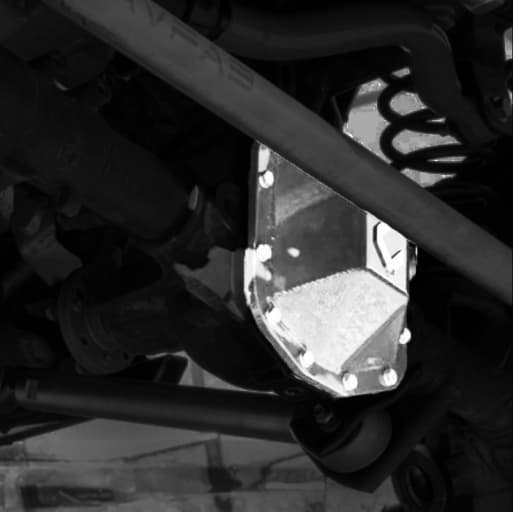
Trail rigs frequently contact differential housings on ledges and rocks, which is why reinforced Jeep differential components matter once the terrain becomes technical.
A diff cover primarily protects the ring gear and sealing surface from direct impact. It does not prevent axle tube flex, but it can prevent a cracked housing from ending a trip.
Lockers for Controlled Traction
Lockers redirect torque to the tire with grip. That increases traction, but it also increases stress on axle shafts and steering components.
Selectable lockers provide control. Automatic lockers engage under torque and can affect steering feel depending on terrain.
Front lockers increase steering resistance dramatically on high-traction surfaces. That resistance transfers directly into the tie rod and drag link. This is where solid steering systems become critical support components rather than cosmetic upgrades.
Chromoly Axle Shafts for High-Load Builds
Axle shaft upgrades become important once you combine tall tires, deeper gearing, and lockers. Shock load occurs when a tire suddenly regains traction after slipping. That torque spike transfers directly into the shaft and housing.
Upgraded chromoly axle shafts increase torsional strength, while reinforced housings or gussets address bending and tube flex. These are separate failure points and should be evaluated independently.
Reinforced Jeep JK axles and strengthened housings reduce the likelihood of shaft twist or spline failure under repeated stress cycles.

Brake Upgrades for Larger Tires
Brakes are often overlooked when tire size increases, but heavier tires increase rotational inertia and heat buildup during deceleration.
Big Brake Kits for Mountain and Load Conditions
If you run 35s and regularly drive mountain terrain or carry added weight from armor and recovery gear, brake upgrades become practical.
Larger rotors increase heat dissipation capacity. Multi-piston calipers distribute clamping force evenly across pad surfaces.
Stainless Steel Brake Lines for Pedal Consistency
Rubber lines expand under pressure and heat. Stainless steel lines reduce expansion and improve pedal consistency during repeated braking cycles. The difference becomes noticeable once tire size and vehicle weight increase.
Tire and Wheel Upgrades
Tires are often the first modification Wrangler owners think about. They are rarely the first modification they should install.
Tire size changes everything. It changes steering load, axle leverage, braking demand, gear ratio effectiveness, and suspension stress. Each size jump requires support from surrounding systems.
33-Inch Tires: The Balanced Upgrade
For daily-driven JK and JL owners, 33-inch tires remain one of the most balanced upgrades available.
They improve ground clearance and traction without dramatically increasing steering resistance or drivetrain strain. Most factory steering components tolerate 33s without immediate reinforcement.
If your Jeep sees mixed highway and trail use, 33s provide capability without forcing deeper gearing or extensive geometry correction.
35-Inch Tires: The Most Common Performance Upgrade
For many owners, 35s represent the practical sweet spot. They provide meaningful trail capability while remaining manageable for street driving.
This is also where supporting upgrades become necessary.
At 35 inches, steering leverage increases significantly. When a tire binds against a rock or ledge, the tie rod absorbs that load instantly. Hollow factory linkage can deflect under that stress. Upgrading steering at this stage prevents trail failures and protects alignment consistency.
Beyond steering, 35s require suspension geometry correction, possible re-gearing depending on factory ratio, and brake evaluation if operating in mountainous terrain or carrying additional armor weight.
This is why tire size alone is never the “best upgrade.” The best upgrade is the system that supports the tire.

37-Inch Tires: A System Commitment
Moving to 37-inch tires changes the build category entirely. You increase scrub radius, steering resistance, axle leverage, rotational mass, and drivetrain load.
The factory steering linkage was not engineered for this leverage. Solid bar stock systems and oversized tie rod ends become structural necessities, not optional improvements.
At 37s, steering rigidity, axle shaft strength, gearing, and braking capacity must be addressed together.
Ball joints also wear out at this tire size, especially under added weight and on high-traction terrain. Ignoring them often leads to vague steering and premature failure.
This is no longer a tire upgrade. It is a structural shift in how the Jeep handles load.
Beadlock Wheels: When They Make Sense
Beadlocks allow safe operation at lower tire pressures, increasing contact patch and traction in rock crawling environments.
They are most useful for dedicated crawlers and technical terrain where consistent low pressure is required. They also increase unsprung weight and maintenance requirements. For daily-driven rigs that occasionally air down, traditional wheels may offer a better balance.
Armor and Protection Upgrades
Armor upgrades absorb impact so structural systems survive. Once tire size increases, contact with obstacles becomes more frequent. Protection determines whether you continue the trail or load onto a trailer.
Front and Rear Bumpers
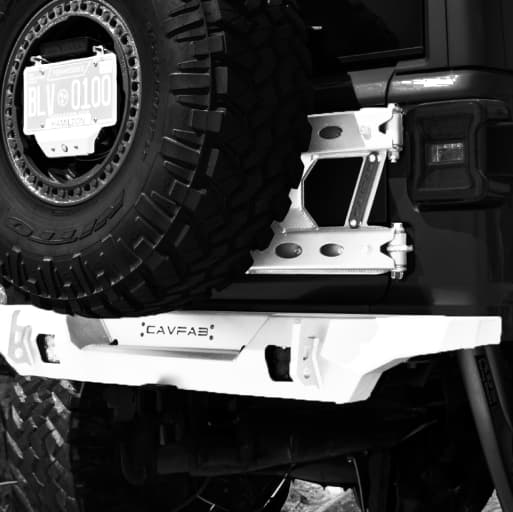
A properly engineered bumper ties directly into frame mounting locations and provides rated recovery points. Recovery loads introduce directional stress that must transfer cleanly into the frame rails.
Angled recoveries introduce lateral shear into mounting bolts and frame horns. A bumper must distribute that load across multiple mounting points rather than concentrating force at the outermost bolts.
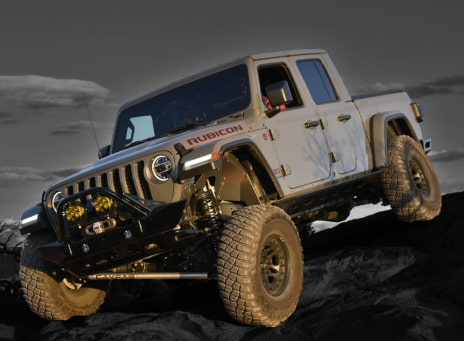
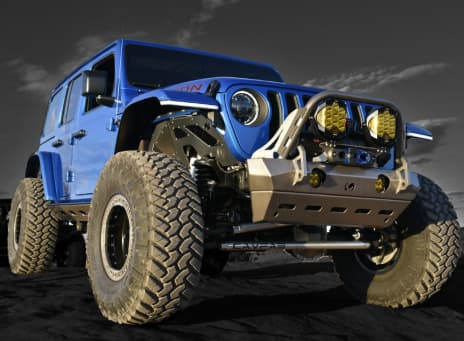
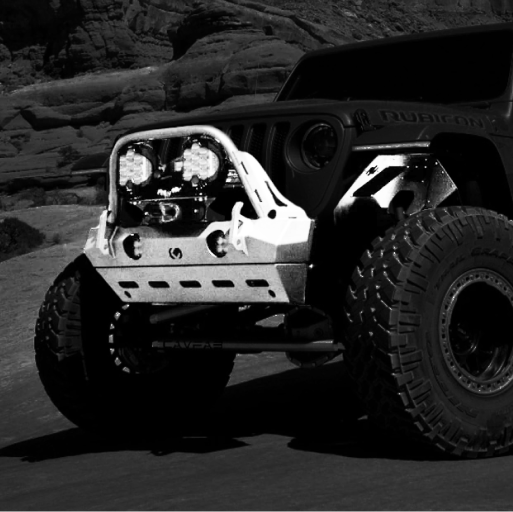
A quality front bumper for Jeep Wrangler should maintain the approach angle while supporting winch integration.
Platform-specific options matter. JK builds should utilize reinforced Jeep JK front bumpers or Jeep JK rear bumpers designed to handle trail impacts and recovery loads.
JL owners benefit from heavy-duty Jeep JL front bumpers and structural Jeep JL rear bumpers that maintain modern fitment tolerances.
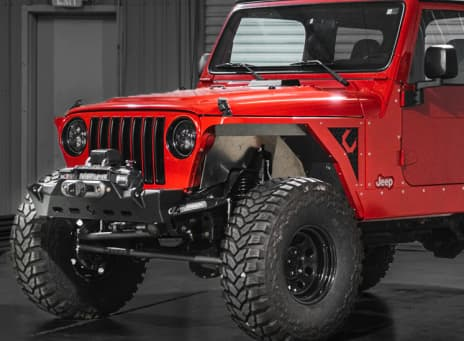
TJ builds require frame-integrated Jeep TJ bumpers or reinforced Jeep TJ rear bumpers to prevent mounting distortion under load.

Skid Plates: Protect What Ends Trips
Oil pans, transfer cases, and fuel tanks are not forgiving components. Damage to any one of them can end a trip instantly. Jeep skid plates mount to structural points and distribute impact load rather than concentrating it.
The protection strategy should follow the terrain type. Rocky ledges demand underbody coverage. Mud-heavy terrain requires clearance to prevent buildup. Reinforced Jeep armor prevents trail damage from escalating into structural failure.
Rock Sliders and Fender Clearance
Rock sliders protect the body when the Jeep pivots on rocks. They must support full vehicle weight without deflecting into the tub.
As tire size increases and articulation improves, fender clearance becomes critical.
Jeep Wrangler fenders maintain coverage while preserving travel. Inner protection also matters. Structural Jeep inner fenders protect engine bay components from debris during high-impact events.
Body damage is expensive and permanent. Protection upgrades like the best Jeep Wrangler fender flares pay for themselves in technical terrain.
Recovery and Trail Support Upgrades
After hundreds of trail runs, we've noticed the same pattern: capability is only part of the setup. Recovery gear and a plan matter just as much.
Winches For Controlled Self-Recovery
A winch allows controlled extraction when traction runs out. The mounting structure must support the winch load. That means bumper strength and frame integration must be evaluated together. Electrical capacity should match winch demand, particularly on builds with added lighting and accessories.
Recovery Gear That Matches the Environment
Recovery tools should match the terrain you wheel most. Rock crawling demands rated straps and shackles capable of sustained load. Mud environments require traction boards and controlled extraction tools. Snow conditions demand flotation awareness and manual recovery planning.
Carry properly rated recovery straps, shackles, and safety gloves. Controlled recovery prevents component damage and injury.
Conclusion
Start where the load shows up first. Lock down steering before 35s expose weak linkage. Correct geometry right after the lift goes on so the Jeep tracks straight and cycles clean.
Match gearing to tire size so the drivetrain stops hunting and overheating. Add protection where trail contact is real, not where it looks good in photos.
Do it in that order, and your Jeep feels composed on rough pavement and dependable when the terrain gets technical. That's the gap between a rig that looks capable and one that keeps finishing trails.
If you're tightening your build, focus on the parts that carry load and take hits. CavFab builds Jeep parts in-house in the USA, with a heavy focus on steering systems, core Wrangler components, and trail-ready protection.
Start with Jeep suspension and platform-specific Jeep Wrangler parts, then reinforce impact zones with Jeep differential protection, a frame-tied front bumper for Jeep Wrangler, and underbody coverage from Jeep skid plates. Build it so it survives the bind, not the parking lot.
Read more about Jeep upgrades for every terrain here: