


Best Off-Road Jeep Wrangler Model
If you're trying to figure out the best off-road Jeep Wrangler model, you're really asking two different questions.
Are you looking for the most capable Jeep straight off the dealership floor? Or are you choosing a platform to build into something serious?
“Best” in an off-road context means traction under cross-axle load, front axle strength under steering bind, crawl ratio in low range, articulation under compression, and long-term durability once you step up to 35-inch tires.
The TJ, JK, and JL generations all offer legitimate trail capability. But they differ in weight, electronics, factory axle strength, steering design, and long-term build flexibility. This guide ranks the top Wrangler models for off-roading, then helps you choose based on how you actually plan to use it.
What this article covers:
- What Makes a Jeep Wrangler Truly Off-Road Capable?
- Jeep Wrangler Models Ranked for Off-Roading
- Jeep Wrangler TJ Rubicon (2003–2006): Best Lightweight Trail Platform
- Best Jeep Wrangler Generation for Off-Roading
- JK (2007–2018)
What Makes a Jeep Wrangler Truly Off-Road Capable?
Before ranking Jeep trims, we need clear criteria. In our experience, “best” in an off-road context is mechanical, not cosmetic. It comes down to traction, axle strength, gearing, articulation, and long-term build support.
Here's what actually determines capability:
- Locking differentials: Lift height gets attention. Lockers get traction. Rear lockers are foundational for moderate trails. Front lockers are what allow a Jeep to crawl up ledges and maintain forward movement when one tire unloads. For technical terrain, lockers matter more than two extra inches of lift.
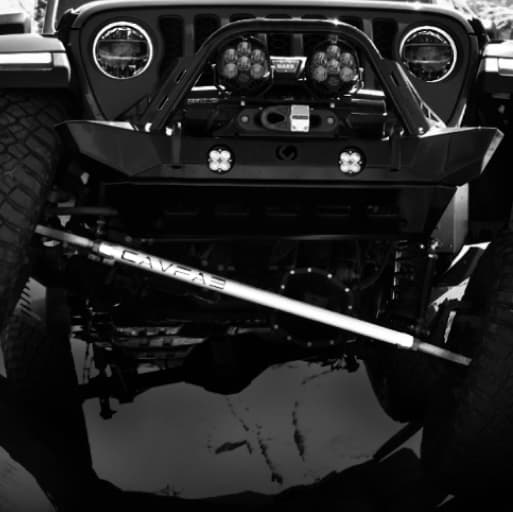
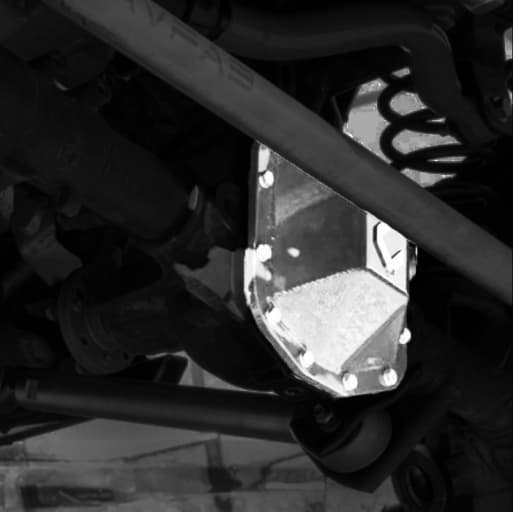
- Front axle strength: Most Sport trims run a Dana 30 front axle. It works well on 33s. Once you move to 35s, steering load and torsional stress increase sharply. Rubicon trims use a Dana 44 front axle with a larger ring gear and stronger shafts. When upgrading, Jeep Wrangler parts and Jeep differential categories become part of the long-term equation.
- Transfer case and crawl ratio: Rubicon models use a 4:1 transfer case. Sport and Willys typically use 2.72:1. That difference directly affects low-speed control. A 4:1 case allows smoother throttle modulation and better descent control in rock terrain.
- Suspension and articulation: All TJ, JK, and JL Wranglers run solid axles and coils, which remain a strong articulation foundation. Electronic sway bar disconnects on Rubicons increase travel without manual intervention. As tire size grows, clearance becomes critical.
- Aftermarket depth and upgrade path: Platform support determines how far you can take a build. The JK has massive ecosystem depth. The JL continues to expand rapidly. The TJ remains strong in crawler communities.

Jeep Wrangler Models Ranked for Off-Roading
Now that we've defined what actually matters on the trail, let's rank Jeep Wrangler trims based on hardware, not badges.
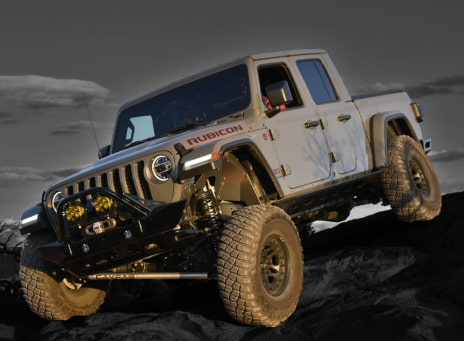
Jeep Wrangler Rubicon (JL and JK): Best Factory Off-Road Model
If you are staying close to stock, the Rubicon is the cleanest factory answer because it includes the expensive hardware that directly impacts trail performance. It delivers Dana 44 front and rear axles and electronic locking differentials.
Out of the box, this configuration handles moderate rock crawling, loose climbs, and uneven terrain with far less driver compensation than lower trims.
Even the Rubicon has limits once you increase tire size or driving intensity.
Where Rubicons shine:
- Strong factory axle package
- True low-range crawl control
- Factory traction without immediate upgrades
- Articulation support with sway bar disconnect
Where Rubicons typically need reinforcement at 35s+:
- Steering linkage durability under bind
- Ball joint longevity under heavier tires
- Gearing correction if moving to 37s
- Brake heat management with added weight
The Rubicon is the most capable stock Wrangler. It is not immune to leverage.
Jeep Wrangler Willys: Best Budget Off-Road Trim
The Willys trim bridges the gap between daily-driver comfort and entry-level trail use. It offers more off-road personality than a base Sport, but without Rubicon-level drivetrain hardware.
The Willys is best when expectations match hardware.
Where Willys works well:
- Light to moderate trail use
- 33-inch tire setups
- Occasional forest road and mild rock terrain
Where Willys becomes limiting:
- No factory 4:1 transfer case
- Typically lighter-duty front axle than the Rubicon
- No electronic sway bar disconnect
- Locker upgrades required for serious crawling
If you plan to stay in the mild-to-moderate range, Willys is cost-effective. If you plan to push into technical rock, budget for drivetrain upgrades early.

Jeep Wrangler Sport: Best Blank Slate for Custom Builds
The Sport is the most strategic starting point for builders who intend to choose their own hardware rather than rely on factory packaging.
It does not include Rubicon traction tools, but it also does not charge you for them.
The Sport makes sense if you plan to build out your trim with trail-ready and tested Jeep Wrangler parts.
Where Sport makes sense:
- Budget-conscious builds with long-term plans
- Owners planning axle, locker, and gearing upgrades
- Controlled progression from 33s to 35s
Where Sport requires immediate planning:
- No factory lockers
- Dana 30 front axle on most configurations
- Standard transfer case ratio
- Steering reinforcement becomes critical at 35s
This is where understanding the best upgrades for Jeep Wrangler builds becomes necessary. The Sport rewards planning, but buckles under random modifications.
Jeep Wrangler TJ Rubicon (2003–2006): Best Lightweight Trail Platform
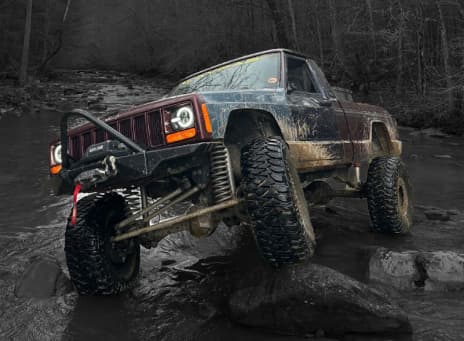
The TJ Rubicon remains a serious contender because of its size, weight, and mechanical simplicity. Its shorter wheelbase and lighter curb weight improve maneuverability on tight trails and off-camber terrain.
Where TJ excels:
- Lightweight crawling builds
- Minimal electronic complexity
- Compact maneuvering in tight terrain
- Enthusiast-driven modification community
Where TJ requires consideration:
- Older platform with aging components
- Less chassis rigidity compared to JL
- Parts sourcing may require more planning than JK/JL
For a dedicated crawler build, the TJ remains extremely capable. For dual-purpose highway comfort and trail performance, newer generations make more sense.
Best Jeep Wrangler Generation for Off-Roading
When you compare generations, you're really comparing chassis strength, electronics complexity, weight, and long-term upgrade flexibility.

JL (2018–Present)
The JL is the strongest modern Wrangler platform if you want factory refinement combined with serious upgrade headroom. The frame is stiffer than previous generations, steering geometry is improved from the factory, and drivetrain options are stronger across trims.
Where the JL shines long-term is platform support. Reinforcement Jeep Wrangler parts continue to expand, and the ecosystem now rivals older generations.
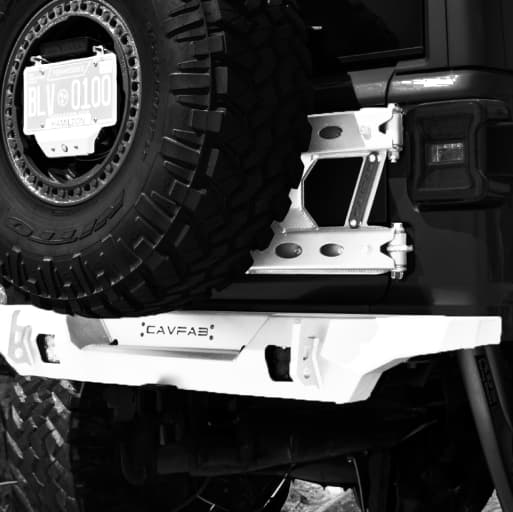
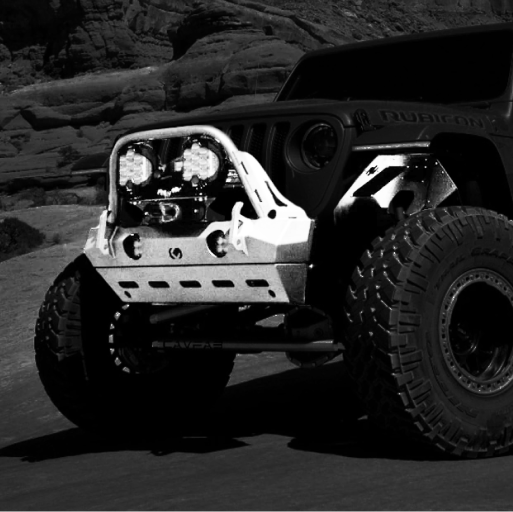
For protection and recovery integration, JL owners have access to purpose-built Jeep JL front bumpers and structural Jeep JL rear bumpers that support winch loads and angled recoveries without compromising approach angle.
If you want a modern daily driver that can scale into a serious trail build over time, the JL is the most balanced platform available today.
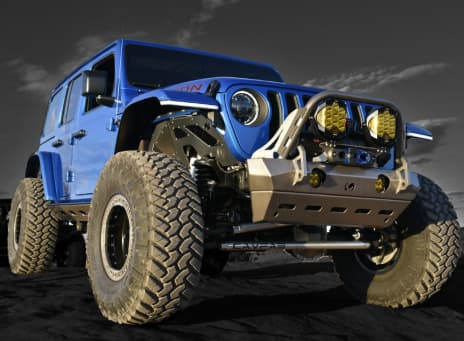
JK (2007–2018)
The JK remains one of the most proven Wrangler platforms ever built. It dominates the used market and has one of the deepest aftermarket ecosystems in off-roading.
From steering reinforcement to axle strengthening, JK owners benefit from mature upgrade pathways across Jeep Wrangler parts and platform-specific options like Jeep JK front bumpers and Jeep JK rear bumpers.
Once you move into 35-inch tires or heavier trail use, JK builds commonly add steering upgrades, axle reinforcement, and corrected suspension geometry through dedicated Jeep suspension solutions.
Protection upgrades, such as Jeep skid plates and broader Jeep armor options, round out serious trail builds.
In our experience, if you want maximum parts availability and a large knowledge base, the JK is still one of the smartest platforms to build.

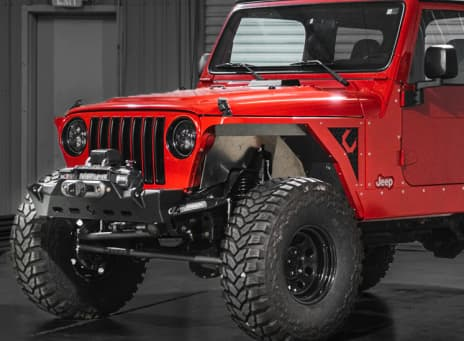
TJ (1997–2006)
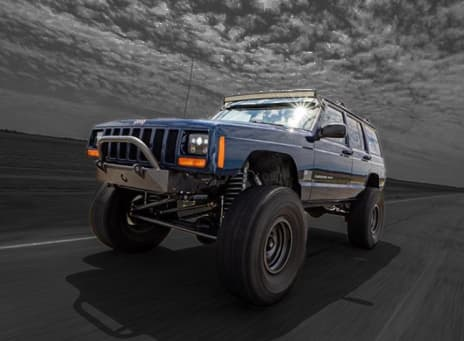
The TJ is lighter and mechanically direct. That simplicity becomes a real advantage for dedicated trail rigs. With fewer electronics and a compact wheelbase, the TJ responds well to targeted upgrades.
Platform-specific support remains strong, especially in enthusiast circles. TJ owners still have access to dedicated Jeep Wrangler TJ parts, structural Jeep TJ bumpers, and reinforced Jeep TJ rear bumpers designed to handle trail impacts and recovery loads.
For compact crawler builds where weight and simplicity matter more than highway refinement, the TJ remains extremely competitive.
Conclusion
The best off-road Jeep Wrangler model is the one aligned with the trails you actually run and the build path you're willing to commit to.
Serious off-road performance eventually demands stronger steering linkage, corrected suspension geometry, and hardware that holds alignment under load.
No matter which Wrangler you choose, you can build it the right way with CavFab.
Start with platform-specific Jeep Wrangler parts, cover the fundamentals with Jeep suspension, then protect what takes hits with Jeep differential, Jeep skid plates, and Jeep armor.
Read more about Jeep upgrades for every terrain here: