

Best Jeep Years
Figuring out the best Jeep years to buy comes down to one thing: knowing which model and generation you're talking about. Jeep is a brand with more than a dozen distinct platforms, rather than one vehicle with a single track record.
A great year for a Wrangler TJ means something completely different than a great year for a Cherokee XJ or a Gladiator JT.
We build steering, suspension, bumpers, and armor for Jeeps, and we talk to builders shopping for a used rig just as often as we talk to people already wrenching on one.
Below, we break the best Jeep years down by category, model, and generation, so you can match the right platform to what you actually want to do with it.
What this article covers:
- Quick Answer: The Best Jeep Years to Buy
- Best Overall Jeep Years: Wrangler JK, 2012 to 2017
- Best Budget Jeep Years: Cherokee XJ, 1991 to 1999
- Most Reliable Jeep Years: Wrangler TJ, 2003 to 2006
- Best to Buy Used Jeep Years: Wrangler JL, 2020 and Newer
- Best Off-Road Jeep Years: Wrangler JK Rubicon, 2012 to 2017
- Best Jeep Year for Builds and Modifications
Quick Answer: The Best Jeep Years to Buy
Every category below points to a different model and year range, since no single calendar year is the strongest choice across the whole Jeep lineup.
Use this as a starting point, then read the full breakdown for the reasoning and the buying checks behind each pick.
- Best overall pick: Jeep Wrangler JK, 2012 to 2017
- Best budget pick: Jeep Cherokee XJ, 1991 to 1999
- Most reliable pick: Jeep Wrangler TJ, 2003 to 2006
- Best used pick: Jeep Wrangler JL, 2020 and newer
- Best for off-roading: Jeep Wrangler JK Rubicon, 2012 to 2017
- Best for builds and modifications: depends on your build goals, covered generation by generation below
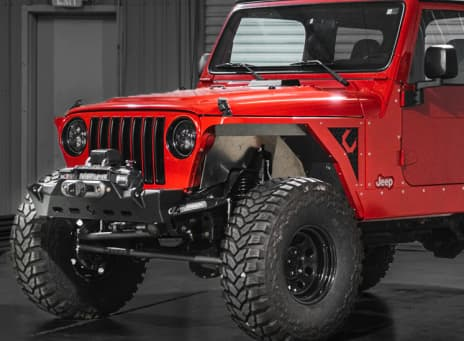
"CavFab quarter panel armor on a red Jeep Wrangler TJ, a build often tied to the best Jeep year picks for this generation"
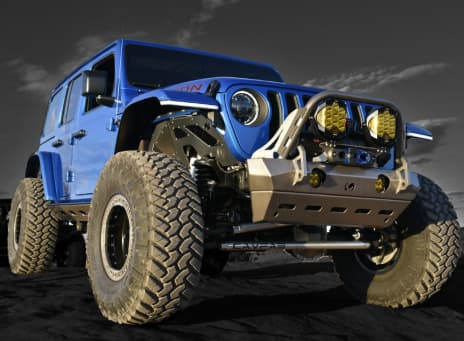
Best Overall Jeep Years: Wrangler JK, 2012 to 2017
The 2012 to 2017 Wrangler JK years hit a balance that's hard to match anywhere else in the Wrangler lineup. Jeep swapped in the 3.6-liter Pentastar V6 starting in 2012. That put an end to the earlier engine's biggest complaints. The 3.8-liter V6 used from 2007 to 2011 shared its roots with a Chrysler minivan engine, and it developed a reputation for feeling underpowered and burning oil faster than owners expected.
By 2015, the electrical gremlins tied to the TIPM (Totally Integrated Power Module) on the earliest JKs had largely worked themselves out of the used market.
- Strong parts and aftermarket support after a decade-plus in production
- The 3.6-liter Pentastar V6 is common and well understood, and it's easy for most shops to service
- Enough used inventory on the market to actually shop around by condition
- A well-proven choice for lifts, axle swaps, and steering upgrades
This era of JK is a common starting point for a first serious build, and steering is usually the first thing to go once tire size increases.
The factory tie rod and drag link setup wasn't built for anything beyond stock sizing, so it's worth budgeting for an upgrade early.
Best Budget Jeep Years: Cherokee XJ, 1991 to 1999
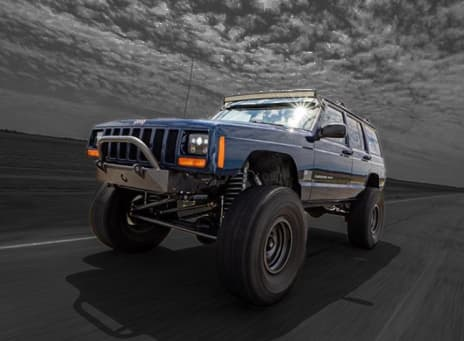
If price matters more than anything else, the XJ Cherokee is still one of the best values in the Jeep world, and the 1991 to 1999 model years are the sweet spot within its long production run.
Jeep introduced the 4.0-liter inline six back in 1987, but the high-output version that arrived in 1991 is the one most mechanics point to, and these engines often exceed 250,000 miles with routine maintenance.
- Low purchase price compared to any Wrangler generation
- Simple mechanicals that are cheap to diagnose and repair
- A massive secondhand parts supply, since the XJ stayed in production from 1984 to 2001
- A lightweight, narrow build that's forgiving on tight trails
We've found that XJ pricing makes it one of the easiest Jeeps to get into without overextending your build budget, which is part of why it's still the backbone of a lot of Jeep builder culture.
A couple of years are worth approaching carefully, though. The earliest XJs from 1984 to 1986 came with a weaker GM-sourced V6, and the final two years, 2000 and 2001, used a revised cylinder head that's known for cracking.
Outside of those years, rust on the unibody, especially around the rear frame rails, is the main thing to inspect before buying.
For a closer look at year-by-year picks, our best Jeep Cherokee year guide goes deeper into specific trim and engine changes across the range. If you're set on an XJ, our crossover steering kit for XJ, TJ, ZJ, and MJ Jeeps is one of the most common first upgrades once tire size goes up.

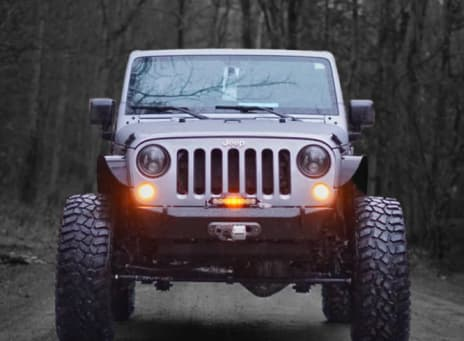
Most Reliable Jeep Years: Wrangler TJ, 2003 to 2006
The TJ generation, and specifically 2003 to 2006, has one of the strongest reliability reputations in the Wrangler lineup. It carries the same proven 4.0-liter inline six as the later XJs, paired with a simpler, less electronics-heavy setup than anything that came after it.
- Fewer electronic systems to fail compared to JK and JL Wranglers
- A drivetrain with a long track record of high-mileage reliability
- Coil-sprung suspension that's straightforward to service and upgrade
- Strong owner community and documentation for troubleshooting
Like any used vehicle, a pre-purchase inspection goes a long way with a TJ. Worth a look on any 2005 model specifically: CV joint wear shows up more often in that year, and it's an easy thing to check before you buy.
Frame condition is worth a look across the whole generation too, and a clean, well-maintained TJ from this era holds up as one of the more dependable used Wranglers you can find. If you're weighing a TJ against a JK, our best and worst years for Jeep Wrangler breakdown compares both generations side by side in more detail.
Best to Buy Used Jeep Years: Wrangler JL, 2020 and Newer
For buyers who want something newer with more of a warranty history behind it, the JL from 2020 onward is generally the safer modern Wrangler pick.
The 2018 launch year carried more early bugs than the generation settled into, and dependability has trended upward with each model year since.
Later JL Wranglers have also posted stronger crash test results than the earliest models, a sign Jeep kept refining the JL after launch.
- Modern safety features and infotainment compared to older generations
- Improved ride quality without giving up serious trail capability
- Growing aftermarket support as the JL matures
- Still recent enough to find low-mileage, well-documented examples
From our experience fitting steering systems to lifted JLs, geometry becomes the limiting factor fast once you go beyond a mild tire size increase.
Confirm any open recalls before buying, particularly on early 4xe hybrid models, and ask for maintenance records rather than relying on mileage alone. Our 2.5 Ton bolt-on steering system for JL and JT platforms is built specifically to hold up under a lifted, larger-tire setup.

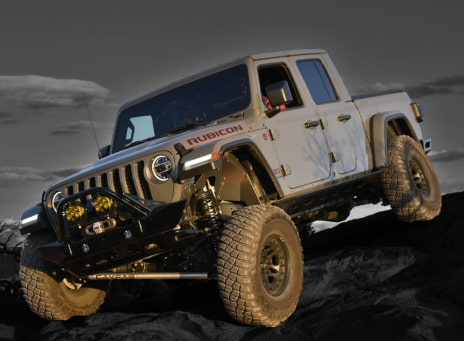
Best Off-Road Jeep Years: Wrangler JK Rubicon, 2012 to 2017
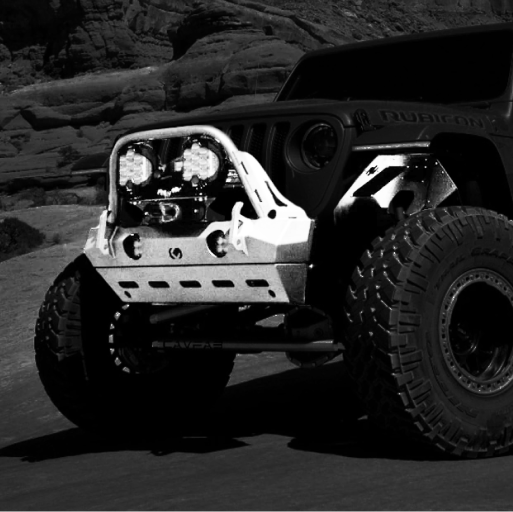
For pure trail capability, the Rubicon trim on the 2012 to 2017 JK is a hard combination to beat. Factory Dana 44 axles front and rear give it real off-road hardware straight from the dealer lot, without needing an axle swap on day one.
Add in electronic locking differentials and a disconnecting sway bar, and it needs less prep work than other trims before it's ready for technical trails.
- Dana 44 axles at both ends instead of the lighter Dana 30 found on base trims
- Factory locking differentials for low-traction terrain
- Electronic sway bar disconnect for extra articulation on the trail
- A well-worn upgrade path, since so many builders have already worked through common JK mods
Builders commonly move to a mild lift and larger tires, plus heavier-duty steering, as the next step, since the factory steering components weren't designed around the tire sizes most Rubicon owners eventually run.
Rust and frame condition matter just as much on a Rubicon as any other JK, so don't let the factory axles distract from a proper inspection underneath. Check fitment with our Jeep suspension and steering collection before you commit to a tire size.
Best Jeep Year for Builds and Modifications
Rather than one universal pick, the strongest choice depends on what you're building toward, and each generation earns its spot on this list for a different reason.
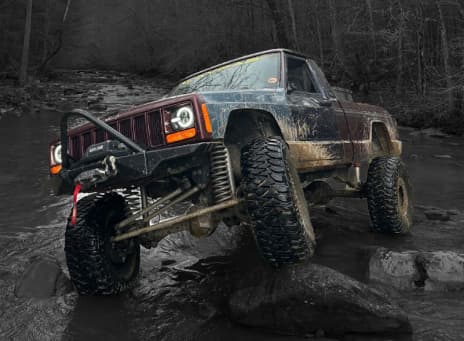
The Cherokee XJ remains the go-to for lightweight, budget-focused trail builds. The Wrangler TJ suits builders who want that same Wrangler capability with fewer electronics to work around.
Once you move into JK and JL territory, you're tapping into the deepest aftermarket support of any Jeep generation today, which matters if you want a wide range of steering, suspension, bumper, and armor options. The Gladiator JT rounds things out for builders who want Wrangler-style capability with a truck bed.
- XJ: best for lightweight, low-cost builds with a huge parts supply
- TJ: best for simplicity and long-term reliability
- JK and JL: best for aftermarket depth and steering or suspension upgrade options
- JT: best for builders who need cargo capacity alongside trail capability
The strongest builds usually start with a clear goal over the newest or shiniest Jeep on the lot. Worn track bars and loose steering components are one of the most common sources of handling trouble on XJ, TJ, JK, and JL Jeeps, and our in-house engineered Jeep track bars are built to tighten that up rather than just replacing tired factory parts with more of the same.
If you're building on a JT instead, check out our Jeep Gladiator parts collection to see what we build specifically for that platform.

Conclusion
There's no single best Jeep year to point to. But once you shop by model and generation instead of a calendar year alone, the decision gets a lot easier.
Match the Jeep to your budget and reliability expectations, then to what you actually plan to build. Inspect the frame, axles, steering components, and service history before you commit, and confirm any open recalls before you buy.
Once you've picked out a Jeep, let's find the Jeep parts you need. Reach out to CavFab with your model, trim, axle, and tire size, and we'll help you match the right kit to your build.