


Best Jeep Cherokee Year
"Jeep Cherokee" covers six very different vehicles built across five decades, and figuring out the best Jeep Cherokee year depends entirely on which generation you're actually talking about.
A 1976 SJ and a 2026 KM share a badge and not much else: different chassis, different engines, different reasons to drive one. We've spent years building steering, suspension, and armor for Jeep platforms, and that hands-on experience is exactly what shapes this guide.
Here, we walk through every Cherokee generation, from the original full-size SJ through the brand-new hybrid KM, calling out the strongest years, the ones worth skipping, and which generation actually makes sense if you plan to build rather than just drive.
Quick Answer: The Best Jeep Cherokee Years to Buy
-
Best overall picks: 1997 to 2001 (XJ)
-
Best budget option: 1991 to 1996 (XJ)
-
Best for builds and modifications: 1984 to 2001 (XJ), any year
Best Jeep Cherokee SJ Years: 1976 to 1983
The SJ was the original full-size Cherokee, built on a body-on-frame chassis shared with the Wagoneer, and it's the one you'll spot least often today, just by nature of its age. The later wide-track years hold up best for buyers who want one.
-
Wide-track SJs carry a factory Dana 44 front axle that's still a popular swap donor for other builds.
-
Optional AMC V8 power, including the 401 cubic inch engine, gave the SJ real highway pull for its era.
-
The final 1983 model year added a new Pioneer trim package, rounding out a lineup that already included the desirable Golden Eagle and Chief trims.
Builders mostly buy an SJ for its heritage and its axles rather than to keep it stock. Parts availability is limited compared to newer Jeeps, and carbureted engines mean more manual tuning.
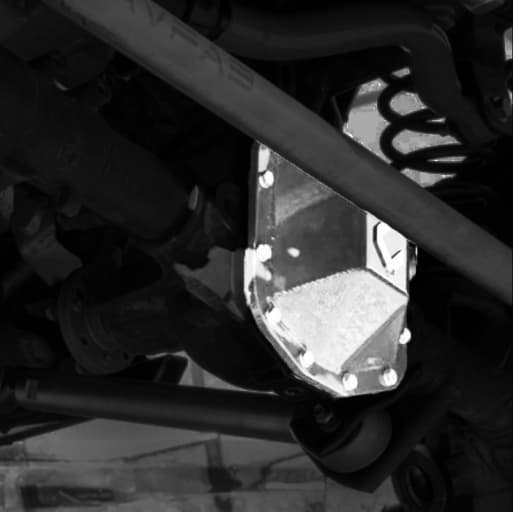
If you want a Dana 44 or Dana 60 to pair with a build on another rig, a diff cover from our diff cover collection is worth a look regardless of what donated the axle.

Best Jeep Cherokee XJ Years: 1997 to 2001
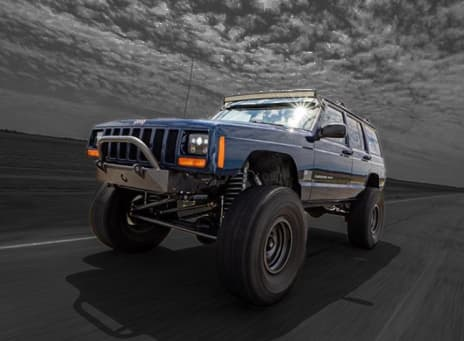
The XJ is where the Cherokee name earned its reputation, and it's still the generation we build for every day. Jeep introduced the 4.0-liter inline six for 1987 and upgraded its fuel injection in 1991, giving later XJs an engine known for running well past 200,000 miles with routine maintenance.
When people ask us to name the best years for Jeep across the whole lineup, not just Cherokees, this stretch of XJ production comes up more than any other generation.
By 1999, the year the Cherokee posted its best-ever global sales, Jeep had also sorted out the OBD-II diagnostics it adopted in 1996, making these trucks easier to troubleshoot than earlier models.
-
1997 and 1998 brought a modest interior and exterior refresh, plus the Classic and returning Limited trims.
-
1999 combined the refreshed cabin with a fully matured drivetrain and strong parts support.
-
2001, the final year, kept the same reliable 4.0L six and sidestepped a cylinder head issue widely reported on some 2000 and early 2001 models.
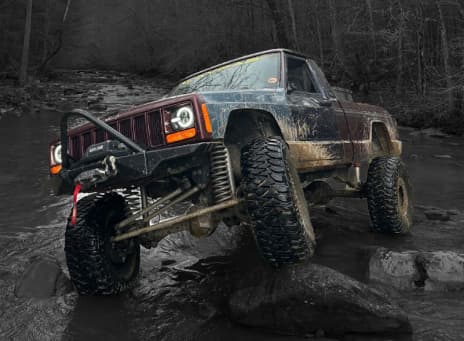
From our experience helping owners plan XJ builds, the biggest advantage isn't any single spec. It's the sheer volume of aftermarket support.
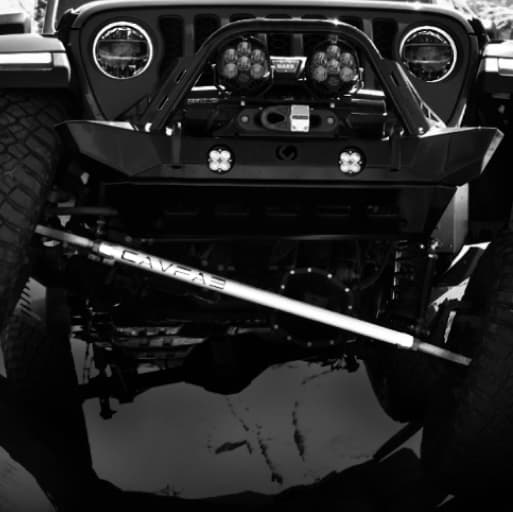
Builders regularly upgrade the front track bar and steering setup first, since factory Dana 30 front axles develop slop as tires get bigger. Our HD crossover steering kit addresses that directly, and our over-the-axle track bar system corrects axle centering on lifted trucks.
After extensively testing this product line on XJs at varying mileage and lift heights, we've found the drivetrain rarely limits how far these Jeeps can go.
Fitment still depends on your tire size and existing mods, so check our full Jeep Cherokee XJ parts collection before you order.

Best Jeep Cherokee KJ Years: 2005 to 2007
Jeep sold this generation globally as the Cherokee, though it's better known in the United States as the Liberty. The 2002 and 2003 model years were hit with an NHTSA-documented airbag control module recall, and ball joint issues persisted into the mid-2000s, so buyers generally do better shopping the tail end of the run.
Jeep's own product history also credits this generation as the first Jeep since the 1960s Wagoneer to use an independent front suspension, a notable departure from the solid front axles found on the XJ and most Wranglers.
-
2005 added Electronic Stability Control and improved brakes.
-
2007 commonly gets flagged as the strongest year in the lineup, once the early recalls and ball joint problems were resolved.
We don't design parts for this platform. Its independent front suspension and unibody construction put it outside the solid-axle Wrangler and XJ builds we specialize in, so treat a KJ as a daily driver with mild off-road manners rather than a project truck.
Best Jeep Cherokee KK Years: 2011 to 2012
Jeep restyled the Liberty into a boxier shape for 2008, badged as the Cherokee internationally. Early KK years, 2008 through 2010, dealt with sunroof drain leaks that let water into the cabin and a driveshaft recall on 2008 models.
-
2011 added a styling and infotainment refresh once the early build issues were behind it.
-
2012, the final year, scored well in owner reliability data and offers solid used-car value.
-
Both years keep the single available 3.7L V6 engine.
The KK falls into the same category as the KJ: capable around town, but not a rig we build parts for. It's a reasonable used SUV, but not a common builder's rig.
Best Jeep Cherokee KL Years: 2019 to 2021
The KL brought the Cherokee name back to North America in 2014, and it's had a rocky reliability history. Consumer Reports' own year-by-year data rates every KL model year from 2015 through 2020 as less reliable than other vehicles from the same year, with 2022 standing out as the only year in the generation CR rates as more reliable than its peers.
Much of the early trouble traces back to the nine-speed automatic transmission Jeep introduced with the KL: 2014 and 2015 models in particular drew a heavy wave of owner complaints over rough shifting and outright transmission failures.
-
2019 through 2021 benefited from updated transmission software and calibration.
-
2022 stands out as the only KL year that Consumer Reports rates as more reliable than other vehicles from the same model year.
-
The Trailhawk trim, available across the generation, adds a locking rear differential and a raised, off-road-tuned suspension.
-
2023, the final year, added extra standard features on upper trims.
If you want a modern crossover with a bit of trail capability, a later KL Trailhawk is the reasonable pick. It's not the platform to bolt our steering or armor kits to, since it doesn't share the solid axles our products are engineered around.

Best Jeep Cherokee KM Years: 2026
The Cherokee returned for 2026 after a three-year break, now built on Stellantis's STLA Large architecture with a standard hybrid powertrain rated around 210 horsepower.
It's a genuinely new vehicle, not a refresh, and its styling deliberately echoes the boxy XJ that started it all. Because 2026 is the only model year on sale, there isn't yet a "best year" verdict to give.
No owner reliability survey has had time to score this generation, and early recall volume remains limited to one software issue.
-
A software recall affecting the brake control module was already addressed with a free dealer update.
-
Fuel economy jumped to an EPA-estimated 37 mpg combined, up from the low-to-mid 20s on the outgoing KL.
-
A more off-road-focused trim has been rumored but isn't officially confirmed yet.
Which Cherokee Is Better for Your Build?
If you're buying to drive, the newer unibody generations make sense. If you're buying to build, the XJ still wins by a wide margin.
-
SJ: Best for heritage projects and Dana 44 axle donors, but parts are scarce.
-
XJ: Best for trail builds, thanks to solid axles and deep aftermarket support.
-
KJ and KK: Best as budget daily drivers with light off-road manners.
-
KL: Best for buyers wanting modern features with occasional trail use, especially in Trailhawk trim.
-
KM: Too new to judge, but worth watching as more owner data comes in.
After years in the industry focused on solid-axle Jeeps, our take is simple: nothing else in the Cherokee family modifies as easily or as affordably as the XJ.
If you're shopping outside the Cherokee nameplate entirely, our best and worst years for Jeep Wrangler guide covers the top Wrangler picks and those to avoid.
Conclusion
Across six generations, one truth holds steady: the XJ, especially those built from 1997 to 2001, remains the strongest all-around pick, with 1999 standing out as our favorite single year. Other generations serve their own purpose, from SJ axle donors to modern KL crossovers with real daily comfort, but none match the XJ for parts support and build potential.
Whatever year you land on, the real work starts with your specific setup: your axle, your tire size, your current mods. That's where fitment gets decided, not the model year alone.
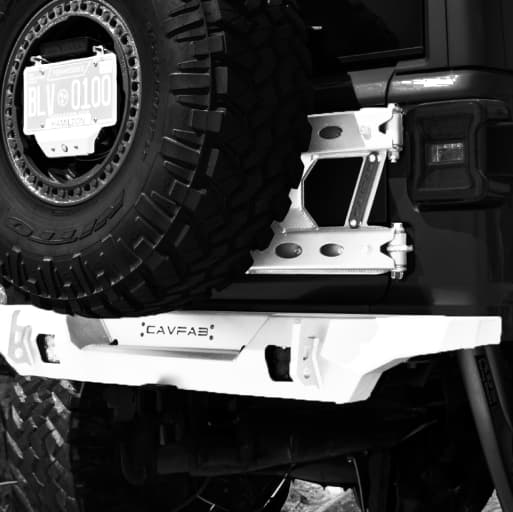
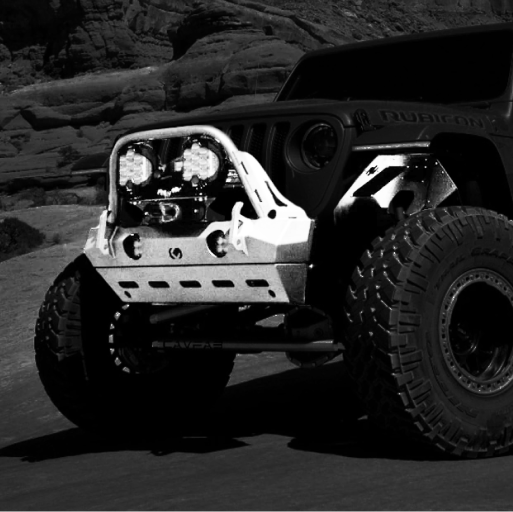
CavFab builds American-made, engineering-first steering, suspension, and armor for exactly these platforms, so send us those details and we'll help you match the right kit to your Cherokee. Or, start browsing our Jeep Cherokee XJ parts collection right now to see what fits your build.