


Jeep Gladiator vs Toyota Tacoma
If you're shopping for a mid-size truck that can handle weekend trails just as well as weekday errands, you've probably landed on two names: the Jeep Gladiator and the Toyota Tacoma. Both trucks have loyal followings, and both show up constantly in off-road forums and dealership lots alike.
From our experience building and testing off-road parts for Jeep platforms, we know the Jeep Gladiator vs Toyota Tacoma matchup gets cross-shopped more than almost any other pair in the segment.
They're built for different priorities, though, and once you understand what sets them apart, the choice gets a lot easier. Let's break down what each truck brings to the table and where the real differences show up once you leave the pavement.
The Jeep Gladiator
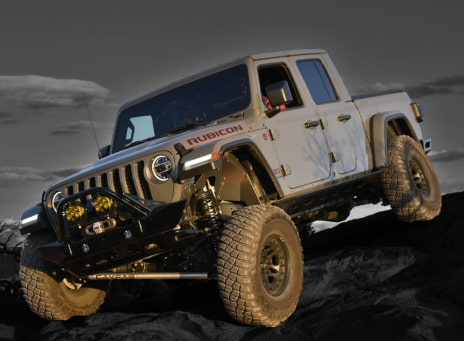
The Gladiator is essentially a Wrangler with a bed bolted on, and that's exactly why people love it. It shares its platform with the Wrangler JL, which means you get a removable roof, doors that come off, and a windshield that folds flat if you're feeling ambitious.
Under the hood, the standard engine is a 3.6-liter Pentastar V6 producing 285 horsepower and 260 lb-ft of torque, paired with either an eight-speed automatic or a six-speed manual, depending on the trim and model year.
Off-road hardware comes standard across most trims, including a two-speed transfer case and four-wheel drive. The Rubicon and Mojave trims push that even further with locking differentials, heavier skid plates, and suspension tuned for rock crawling or high-speed desert running, respectively.
After years in the industry building bumpers and armor for this exact platform, we can tell you the Gladiator's factory approach and departure angles already beat most trucks in its class, and that's before anyone adds aftermarket parts.
The cabin has grown up, too, with a bigger touchscreen, better materials, and the Uconnect system that's genuinely easy to use on the trail or the highway.

The Toyota Tacoma
The Tacoma has spent decades building a reputation as the truck that just doesn't quit, and that reputation still carries a lot of weight with buyers. The current generation comes with a 2.4-liter turbocharged four-cylinder as the base engine, with more powerful tunes and a hybrid option available further up the trim ladder.
The TRD Off-Road trim adds an electronically locking rear differential, all-terrain tires, and a suspension setup built for moderate trail use, and it's one of the few trucks left that still offers a manual transmission if you want one.
Inside, the Tacoma leans into a rugged, straightforward design with plenty of physical buttons and durable materials that are built to last. It rides more comfortably around town than the Gladiator, thanks to softer springs and less aggressive tires on most trims.
Fuel economy is a genuine strength here too, and the Tacoma's standard safety suite, including lane-keep assist and blind-spot monitoring, is broader than what the Gladiator offers without upgrading to a safety package. It's a truck built for people who want off-road capability without giving up daily comfort.
Jeep Gladiator vs Toyota Tacoma: What Are the Differences?
Now that we've covered what each truck offers on its own, let's put them side by side. Here's where the Gladiator and Tacoma really start to separate from each other:
1. Off-Road Capability
This is where the Gladiator really separates itself. Its longer wheelbase and higher ground clearance give it an edge in the dirt, and its approach and departure angles are better suited to climbing over obstacles without scraping the front or rear bumper.
The removable doors and folding windshield aren't just cool features, either. They change how connected you feel to the terrain around you in a way the Tacoma simply can't replicate. We've seen firsthand how much headroom this platform has for serious trail builds. The Tacoma is capable in its own right, but it's playing a more conservative game.

2. Towing and Payload
Numbers vary by source and trim, but the Gladiator generally holds a towing advantage, with some configurations rated up to 7,700 pounds compared to the Tacoma's roughly 6,400-pound ceiling on its best trims.
Base towing figures are closer, with the Gladiator's standard rating still coming in around 1,000 pounds ahead of a comparably equipped Tacoma. If you're planning to haul a trailer full of gear out to the trailhead, that extra capacity matters.
3. Upgradability
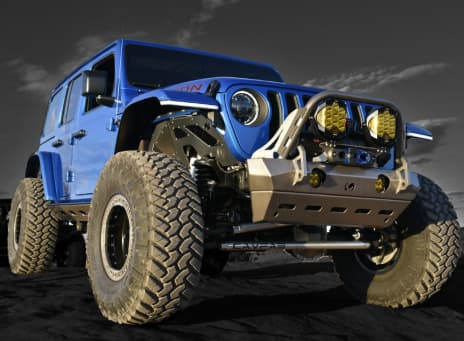
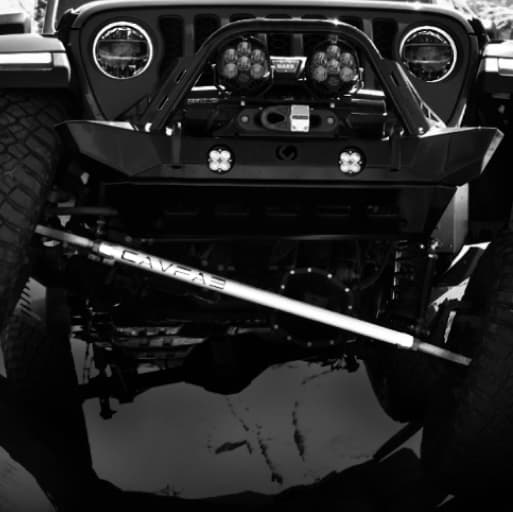
If you're planning to build your truck out over time, the Gladiator has a clear head start. Its Wrangler-based platform means the aftermarket for Gladiator parts is deep and mature, covering everything from suspension to armor to lighting.
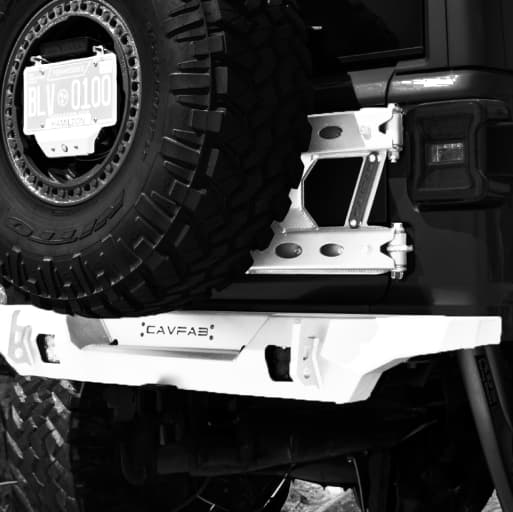
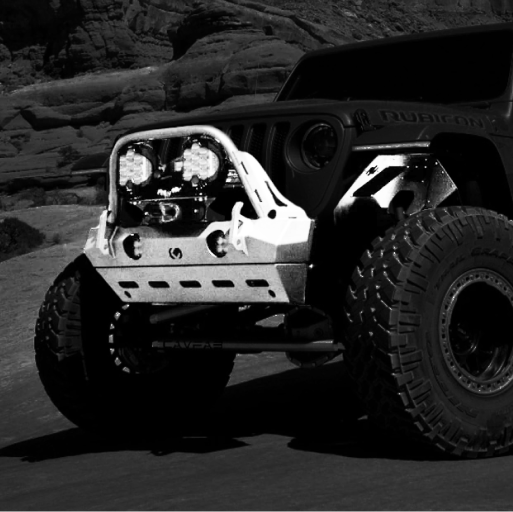
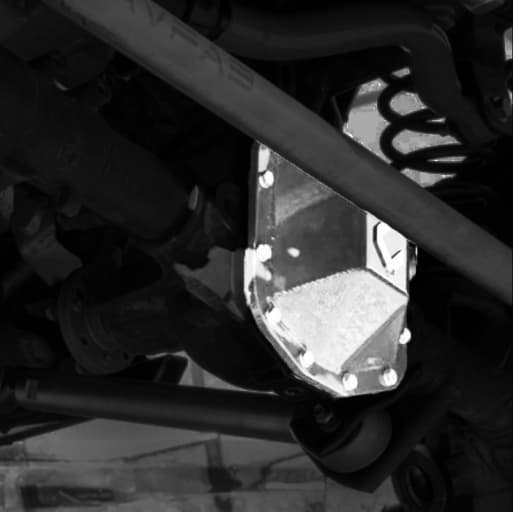
From our experience, that matters more than most buyers expect once they start customizing. We build Jeep Gladiator bumpers and armor specifically for this platform, and the factory geometry gives our kits a lot to work with right out of the gate.
The Tacoma has a solid aftermarket, too, but it doesn't match the sheer range of options available for the Gladiator, especially for serious trail builds.
4. Powertrain Character
The Tacoma's turbocharged four-cylinder puts down more low-end torque, which makes it feel quicker off the line. The Gladiator's V6 needs to rev a bit to get going, but from our experience, that trade-off comes with cleaner, more predictable power delivery once you're actually on uneven terrain.
Traction control has less work to do, and that translates to a smoother, more confident feel when you're crawling over rocks instead of accelerating on pavement.

5. Open-Air Driving Experience
There's no contest here. The Gladiator's soft top, hardtop options, removable doors, and fold-down windshield give it a level of open-air freedom that no Tacoma trim can match. It's the kind of feature that doesn't show up on a spec sheet but completely changes how a truck feels on a sunny trail day.
6. Technology and Interior
The Gladiator's larger touchscreen and Uconnect system are widely considered easier to navigate than the Tacoma's setup, even though the Tacoma's standard safety suite is more comprehensive out of the box.
Both trucks use durable materials and keep plenty of physical controls, which off-road drivers tend to appreciate when trail dust and gloves are involved.
7. Ground Clearance and Approach Geometry
The Gladiator's factory ground clearance gives it more breathing room over rocks, ruts, and washed-out trails than the Tacoma offers in comparable trims. Combined with its steeper approach angle, the Jeep can tackle steeper inclines without the front bumper making unwanted contact. The Tacoma holds its own on moderate trails, but the Gladiator's geometry gives drivers more confidence when the terrain gets serious.
8. Bed Size and Cargo Space
The Tacoma offers a longer, more usable bed for hauling gear, tools, or building supplies, which makes it the more practical choice for buyers who need serious cargo capacity.
The Gladiator's shorter bed is a trade-off for its shorter overall wheelbase advantage on the trail, so it's less ideal if hauling large loads is a daily requirement. For weekend adventurers who prioritize trail performance over cargo room, the Gladiator's compromise here is an easy one to accept.
Want to know more about how the two brands hold up? Take a look at our guide on Jeep vs Toyota reliability.

Should You Choose the Jeep Gladiator or the Toyota Tacoma?
We'd point you toward the Jeep Gladiator, and it's not a close call for anyone serious about off-roading. The Gladiator's factory off-road geometry, stronger towing capacity, and open-air design give it a real edge for the kind of driving that actually gets a truck dirty.
The Tacoma is an excellent, reliable choice if daily comfort and fuel economy top your list, and there's nothing wrong with picking the truck that fits your lifestyle.
But if you want a platform that rewards upgrades and keeps getting better the more remote your trips become, the Gladiator gives you more to work with from the factory floor up.
Tacoma vs Jeep Gladiator FAQs
Is the Jeep Gladiator good for daily driving?
Yes, though it's a bit thirstier and rides firmer than the Tacoma around town. Most owners find the trade-off worth it once they're off pavement, but if your daily commute is mostly highway miles, the Tacoma will feel more refined.
Can you tow a camper with either truck?
Both trucks can handle a small to mid-size camper trailer, but you'll want to check the exact towing capacity for your trim and configuration before buying. The Gladiator generally has more room to work with here.
Which truck is easier to work on yourself?
The Gladiator's Wrangler-based simplicity and huge aftermarket support make it a favorite for DIY builds and repairs. The Tacoma is straightforward, too, but its systems are a bit more tied to Toyota's dealer network for certain repairs.

Conclusion
Both the Jeep Gladiator and Toyota Tacoma earn their spots as two of the most capable mid-size trucks on the market, and you really can't go wrong with either one. But if off-roading is the priority and you want a truck built to grow alongside your next build, the Gladiator's factory geometry and Wrangler DNA give it the advantage.
At CavFab, we've spent years building bumpers, armor, and parts specifically for the Gladiator platform, and we know exactly how much potential it has once you start customizing it for the trail. For a wide range of Jeep parts and customization options, check out CavFab.