


Bronco vs Jeep
If you've spent any time browsing off-road SUVs, you've probably landed on the same question everyone else does: Bronco vs Jeep? It's one of the liveliest rivalries in the automotive world right now, and for good reason. Both vehicles promise open-air freedom, removable doors, and the kind of go-anywhere attitude that gets people excited about weekend trips off the pavement.
From our experience building parts for these vehicles and watching them tackle everything from rocky switchbacks to sandy washes, we know exactly what separates a good off-roader from a great one. In this guide, we'll walk through how the Ford Bronco and Jeep Wrangler stack up, and why we think one of them earns the win when it really counts.
Ford Bronco vs Jeep Wrangler: Main Features
Both of these SUVs share a lot of DNA on paper. They're body-on-frame, they both offer two-door and four-door configurations, and they both let you strip off the roof and doors for that classic open-air feel. But once you get past the surface similarities, the differences start to matter a lot more, especially if you actually plan to take your vehicle off the beaten path.
1. Off-Road Capability and Suspension
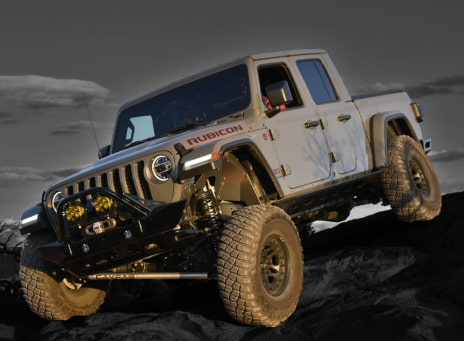
This is where the Wrangler has built its entire reputation, and it still holds up. The Wrangler relies on solid front and rear axles, a setup that has powered serious rock crawlers for generations. Solid axles flex more than independent suspension systems, meaning more tire contact on uneven terrain and better traction when the trail gets gnarly.
The Rubicon trim adds locking differentials and a Rock-Trac 4x4 system built for technical terrain. The Bronco uses an independent front suspension instead, which smooths out the highway ride but sacrifices some articulation on the trail.
Having put both suspension setups through real trail conditions ourselves, we've found the Wrangler's simpler design holds up better once the terrain gets tough.

2. Powertrain and Performance
Engine choice is another area where the Wrangler pulls ahead. The lineup ranges from an efficient turbocharged four-cylinder to a plug-in hybrid and, for 2026, the return of the 6.4-liter HEMI V8 pushing up to 470 horsepower. That's more raw power than anything in the Bronco lineup, and it gives Wrangler buyers a wider spread of options depending on how they want to build their rig.
The Bronco's turbocharged engines are solid performers, and Ford's EcoBoost efficiency deserves credit. But when horsepower ceilings and long-term engine simplicity matter, the Wrangler gives you more to work with, whether you're chasing performance or planning future upgrades.
3. Fuel Economy
Fuel economy is close between these two, but the Wrangler actually holds a slight edge, and it does so with its available turbocharged four-cylinder engine. The Bronco reaches its best mileage with its EcoBoost V6, so the comparison isn't quite apples to apples.
Either way, the gap is small enough that it shouldn't be a deciding factor for most buyers. What should matter more is what you're getting for that fuel spent, and the Wrangler's off-road pedigree makes every gallon count on the trail.
4. Interior Comfort and Technology
The Bronco does bring some nice tech to the table, including a larger available digital gauge cluster and some added driver-assist features. We won't pretend otherwise. But the Wrangler isn't behind the times either.
It comes standard with a spacious touchscreen, runs Stellantis' Uconnect 5 software, which reviewers consistently praise for being intuitive and easy to use, and offers Nappa leather on upper trims for a genuinely upscale cabin feel.
More importantly, the Wrangler's interior is built with trail use in mind first, which matters a lot more once you're hosing mud off your floor mats after a weekend trip.

5. Customization and Aftermarket Support
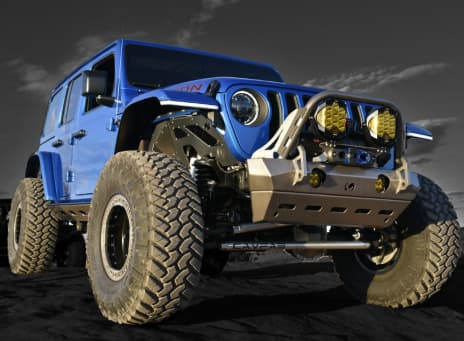
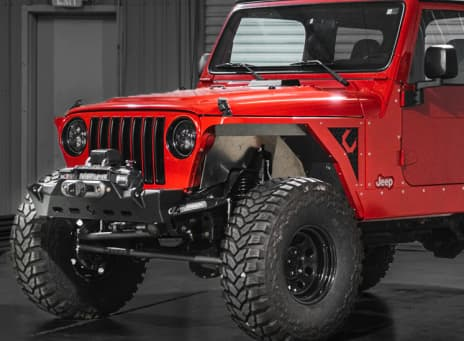
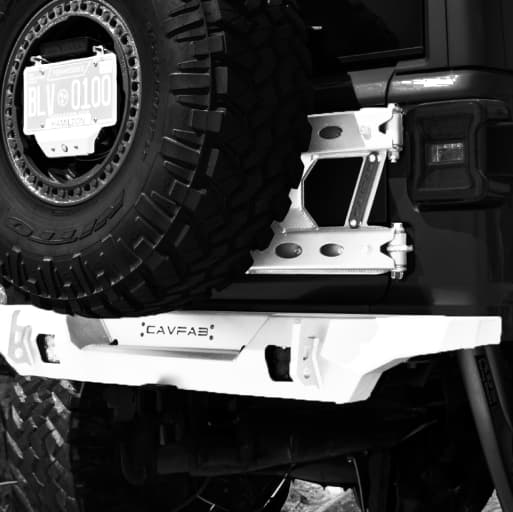
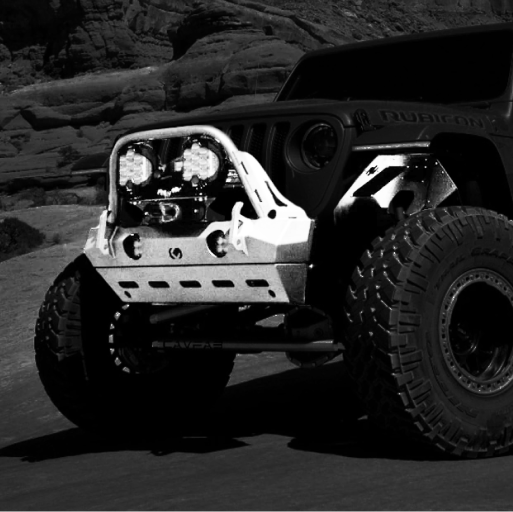
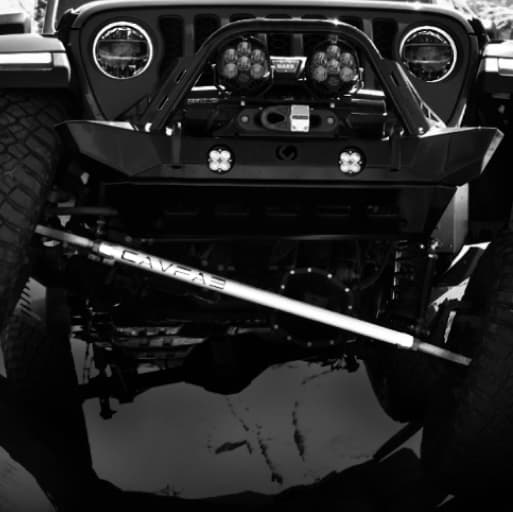
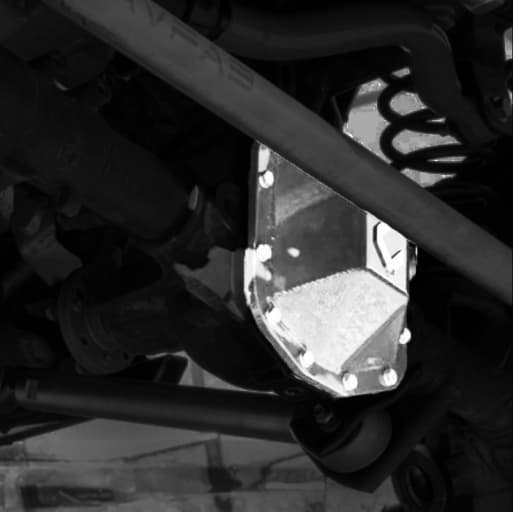
Here's where the conversation really tilts in the Wrangler's favor. Jeep owners have access to one of the largest and most mature aftermarket ecosystems in the automotive industry, and after years in the industry building Jeep bumpers, Jeep skid plates, and Jeep armor for Wrangler platforms, we've seen firsthand just how deep that support runs.
At CavFab, our suspension components are built to work with the Wrangler's solid axle setup rather than around it, so lifted rigs keep the articulation that makes them capable in the first place. The platform also hasn't changed dramatically over the years, so parts designed for one model year tend to carry over well to the next.
The Bronco's aftermarket scene has grown since its 2021 relaunch, but it's still playing catch-up to decades of Jeep-specific engineering and community knowledge.
6. Price and Value
Value matters too, and the Wrangler wins here in a straightforward way. It carries a lower starting MSRP than the Bronco, which means more of your budget can go toward the upgrades and accessories that actually make a build yours instead of getting eaten up by a higher sticker price from the factory.

Jeep Wrangler or Ford Bronco: Which Should You Choose?
Choose the Jeep Wrangler. It comes down to trail capability, long-term simplicity, and the depth of support behind the vehicle once you own it. The Bronco is a genuinely capable SUV, and we won't pretend it isn't a strong competitor. It rides more comfortably on pavement and brings some nice tech upgrades to the segment.
But the Wrangler was built from the ground up as an off-road tool first, and that shows in its solid axle setup, its locking differentials, and its Rock-Trac 4x4 system on Rubicon trims.
The Wrangler also benefits from a much wider engine lineup, a lower starting price, and decades of aftermarket development that make it easier and more affordable to build the exact rig you want.
In our years helping people plan out their Wrangler builds, the ones who end up happiest with their purchase are usually the ones who prioritize trail performance and long-term customization over a slightly smoother highway ride. If that sounds like you, the Wrangler is the smarter choice.
Want to learn about how other vehicles compare? Check out our guide on Hummer vs Jeep.
Jeep vs Bronco FAQs
Does a Wrangler hold its resale value better than a Bronco after five years?
Yes. The Wrangler has consistently ranked among the top vehicles for resale value in its class, largely because its design changes so little between model years.
Which one sits higher off the ground on base trims?
A base Wrangler sits at 9.7 inches of ground clearance versus 8.4 inches on a base Bronco, before adding any off-road packages.
Does the Wrangler come standard with a full-size spare tire?
Yes. Every Wrangler trim includes a full-size spare, matching the Bronco's standard setup and giving both a genuine backup tire off-grid.

Conclusion
The Bronco vs Jeep debate isn't going away anytime soon, and honestly, that's a good thing. Competition has pushed both vehicles to get better year after year. But when you weigh trail capability, mechanical simplicity, aftermarket depth, and overall value, the Jeep Wrangler still comes out ahead for buyers who actually want to go off-road and not just look the part.
If you're leaning toward a Wrangler, or you already own one and you're ready to start building it out, we're here to help.
At CavFab, we design and build Jeep parts specifically for real off-road use, from armor to suspension components, so you can take on any trail with confidence. Reach out to our team and let's talk about what your next build should look like.